
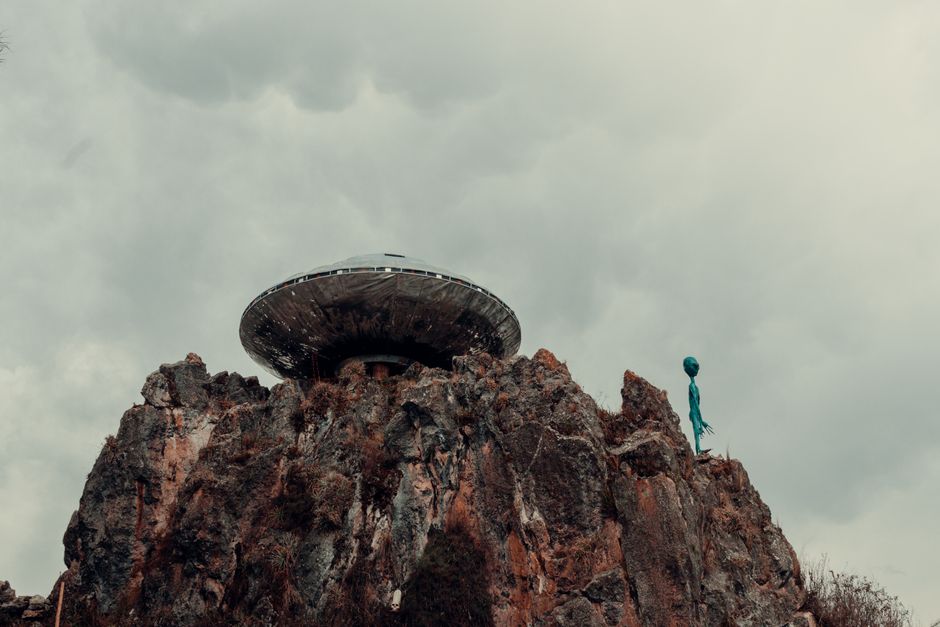
A prominent Catholic exorcist lost his official position after publicly claiming that UFO sightings may actually be demonic manifestations, sparking controversy within the Church and reigniting debate over the intersection of faith and unexplained aerial phenomena.
Church Removes Exorcist Following Controversial Statement
Monsignor Stephen Rossetti, who served as one of America’s most recognized Catholic exorcists, was stripped of his official duties after making public statements linking unidentified flying objects to demonic forces. Rossetti, who holds credentials as both a priest and psychologist, had built a reputation over years of performing exorcisms for his diocese. His removal came shortly after his UFO-demon theory gained widespread attention, though the Church has not issued detailed public comments explaining the specific reasons for his dismissal from the exorcist role.
The controversy highlights ongoing tensions within religious institutions about how clergy members engage with modern mysteries and scientific questions. Rossetti’s dual background in psychology and theology had previously lent credibility to his work, making his removal particularly noteworthy within Catholic circles. The swift action suggests Church leadership viewed his public statements as problematic, potentially undermining either doctrinal positions or the Church’s relationship with scientific inquiry into unexplained phenomena.
The UFO-Demon Connection Theory
Rossetti’s claims centered on the idea that many reported UFO encounters could be explained through a spiritual lens rather than an extraterrestrial one. This perspective represents a subset of thinking within some religious communities that interprets modern unexplained events through traditional theological frameworks about spiritual warfare and demonic deception. Such views contrast sharply with scientific approaches to studying unidentified aerial phenomena, which have gained renewed legitimacy through recent government investigations and military pilot testimonies about unexplained objects.
The theory connects to longstanding religious teachings about demonic entities having the ability to manifest physically or create illusions. Proponents of this view argue that the increase in UFO reports coincides with declining religious practice in America, suggesting a spiritual rather than technological explanation. Critics counter that this approach dismisses legitimate scientific investigation and conflates separate categories of human experience.
Implications For Faith And Science Dialogue
The incident raises questions about boundaries between religious authority and personal theological speculation, especially when clergy members hold official institutional positions. The Catholic Church has historically maintained careful positions on unexplained phenomena, often requiring extensive investigation before making doctrinal pronouncements. Rossetti’s removal suggests the Church prefers its official representatives maintain more cautious public stances on controversial topics that blend faith claims with disputed phenomena. The case also reflects broader American debates about how traditional religious institutions navigate increasingly public discussions of topics once confined to fringe conversations, now entering mainstream discourse through government acknowledgment of unexplained aerial phenomena.
I think the devil will appear in many forms Evan Alien form so I agree with the priest probably why he was fired for shinning light on the demons deeds
I think it’s funny how the pope. I can’t remember witch pope but said he would baptize an alien if they came to earth so go figure.
Gee, what if it is strictly a personality difference between McElroy as a “progressive pro-lgtbq accepting lavendar” prelate versus an exorcist who perhaps is a tad more conservative in many respects than what McElroy’s history represents?
Once you accept the existence of demons, you must accept they are a nonhuman life form. It follows they should appear as “alien”. Whatever UFOs are, the possibility at least some “aliens” are demons shouldn’t be dismissed out of hand.
It is true. Fallen demons. Open your Bibles. Genesis 6. A Nephilim connection.
Jesus Himself made fasncinating statement regarding the end time. Luke 17:26.
Popes have history of denial. In past excommunicated to silence science. Now prefer to attack through encyclical. Safer than pushing their views from chair of Peter and immediately suffering God’s wrath.
I agree with Mickey Sanchez. Eventually one of these “extra terrestrials” will enlighten us as to how they are the ones who seeded life on this planet and they are here to save us from ourselves. Probably to explain away the Rapture.