
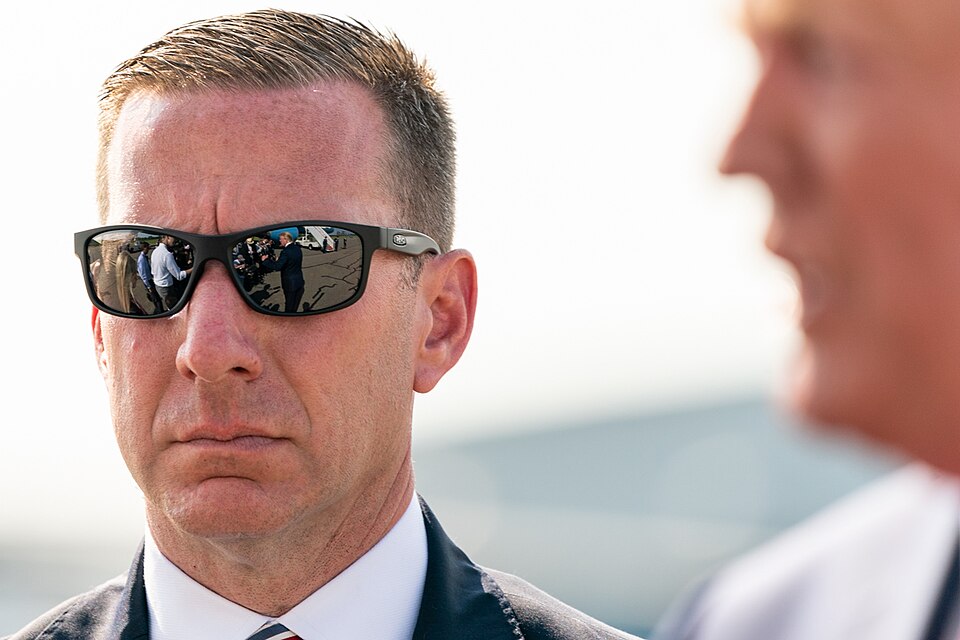
The Secret Service has opened approximately 10,000 protective intelligence cases since January, marking a nearly 40% surge compared to the same period last year and representing threat levels unprecedented in the agency’s recent history.
Threats Reach Historic Levels
Secret Service Director Sean Curran revealed the alarming statistics during a Wednesday briefing ahead of the rescheduled White House Correspondents’ Dinner. With 24 years of experience in the agency, Curran stated he has never witnessed numbers this high. The threat environment has become increasingly volatile across all protected individuals and venues, with most threats now originating online rather than through traditional communication methods like handwritten letters.
The agency has also conducted nearly 10 times more mental health-related interventions involving individuals making threats against protected persons or locations. These interventions include both voluntary and involuntary commitments, plus coordination with family members and mental health providers to stabilize people experiencing crisis situations. Officials attribute the spike to online threats, lone actors, ideological grievances, foreign threats, and mental health concerns.
How Agents Identify Danger
The Secret Service treats all reported threats as potentially credible until investigators determine whether someone possesses the intent, means, and ability to carry out targeted violence. A person does not need to make a direct threat to draw agency attention. Threat assessment relies on behavioral indicators rather than demographic profiles, with agents watching for obsessive fixation, escalating grievances, stalking, harassment, paranoia, delusions, suicidal tendencies, significant behavioral changes, and unusual interest in violence.
Curran defended the agency’s security perimeter setup, noting that magnetometers positioned 120 yards from protected areas demonstrate the system works when dangerous individuals are stopped at checkpoints. The agency expects potentially threatening people to appear at screening locations, which is precisely why specialized response teams are stationed there. Balancing standoff distances against the impact on surrounding businesses and communities remains an ongoing challenge.
Foreign and Domestic Threats Combined
Deputy Director Matt Quinn confirmed that the publicly known Iranian threat against President Trump represents only one component of the intelligence incorporated into protective planning. Iran has openly stated its intention to harm the former president, and this threat along with other undisclosed information factors into Secret Service operations continuously. The agency deploys advance teams to every presidential location regardless of prior visits because environments, footprints, and circumstances constantly change, requiring fresh security assessments each time.
Obviously, if violence is being tagged as mental health issues, shouldn’t this type of healthcare be “affordable?”
With CBD gummies being leagal, smoking pot, and accessability to other mind altering drugs easy to get, might be a starting place to investigate why the violence is occurring. Top that off with media sturring up the coals, you get a fire.
It’s called Trump Derangement Syndrome. The violence is encouraged by Democrat politicians and the media.
The media is in my opinion the biggest threat they need to contend with. It seems like anything a media person says that could be interpreted as negative about the president no matter who it is should be considered a threat. Because all of these negative comments are immediately blown out of proportion and interpreted in dangerous ways by unstable people.
I totally agree with you!
I agree
The media is in my opinion the biggest threat they need to contend with. It seems like anything a media person says that could be interpreted as negative about the president or anyone else, no matter who it is, could lead to dangerous actions. Because so many of these negative comments are immediately blown out of proportion and interpreted in dangerous ways by unstable and angry people. Just disagreeing with someone has apparently become justification for threatening behavior.
Part of problem is closure of medical retention facilities. Another is immigration and low deportation rates for many millions entering USA without professional mental evaluations prior to granting or extending visas and excessive granting admission to foreign students and foreign educators at college and university level.
True!
We should locate and arrest those making threats!