
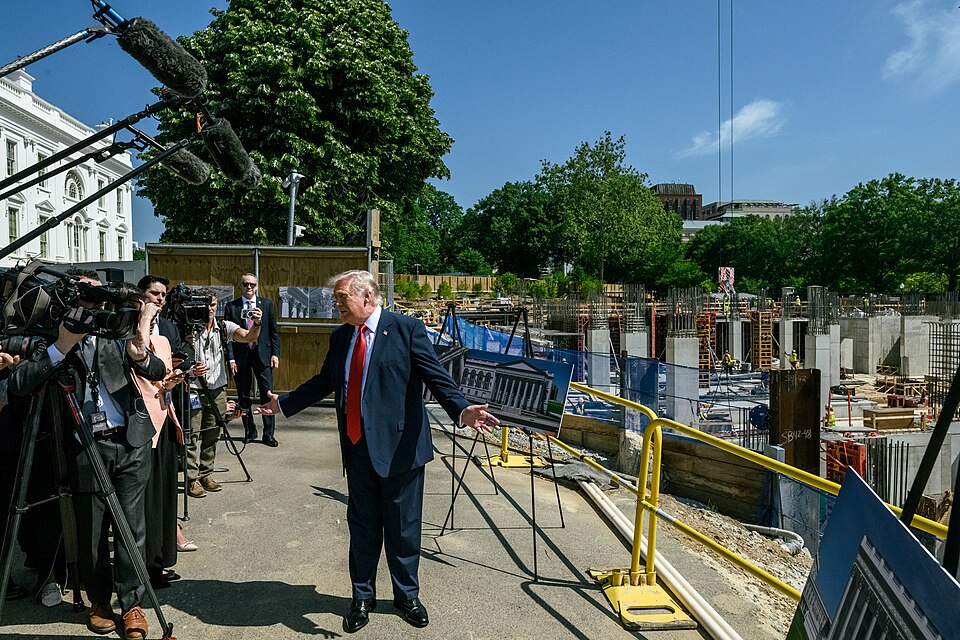
President Trump’s extensive White House renovation project could reach $927 million in total costs, with American taxpayers funding the majority of the work through federal agency transfers that bypass traditional Congressional approval, according to Washington Post budget records.
How The Money Moves
The Trump administration has directed $875 million into the Executive Residence account since January 2025. This includes $500 million transferred from the Secret Service and White House Military Office, $305 million from private donors, and $70 million from an undisclosed source. The planned improvements extend beyond the mansion itself to include Lafayette Square upgrades, a new helipad, and an enhanced visitor screening center.
While these financial maneuvers operate within legal boundaries, budget experts quoted by the Washington Post described the amounts as exceptionally unusual. The Executive Residence office remains exempt from standard transparency requirements that govern other federal agencies, keeping all contract awards confidential from public scrutiny.
Court Pushback On Construction
Two judges on the District of Columbia Court of Appeals issued a ruling last week halting above-ground construction until Trump secures Congressional authorization. The judicial opinion emphasized that presidents serve as temporary tenants rather than owners of the White House. The court noted no prior president has ever demolished substantial portions of the building using private funds without legislative approval.
White House spokesman Davis Ingle defended the renovations as necessary improvements timed for America’s 250th independence anniversary. He cited the failed attack on the UFC Freedom 250 event at the White House as justification for enhanced security features, including drone-proof structures and dedicated drone ports within the East Wing Modernization Project.
Historical Precedent
Previous presidents who undertook major White House renovations followed different procedures. Franklin Roosevelt and Harry Truman both secured Congressional funding for their extensive repairs. Barack Obama similarly requested Capitol Hill approval for his modernization efforts. The current approach marks a departure from this established pattern of legislative oversight for major presidential residence modifications.