
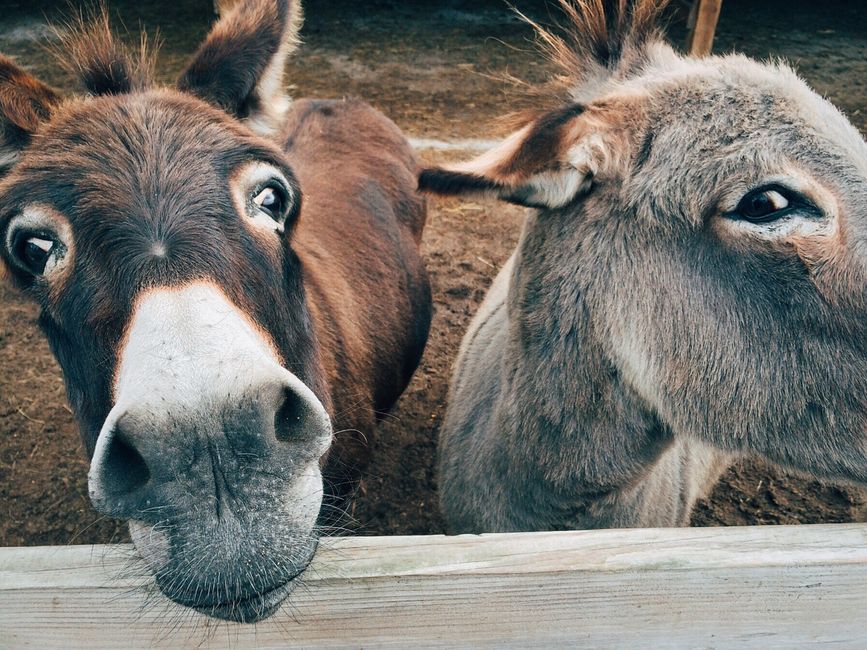
A Cedartown police officer shot and killed a family’s beloved miniature donkey during a K-9 training search, sparking an investigation by the Georgia Department of Agriculture and legal action from the grieving owners who insist their animal posed no threat.
What Happened During the Search
Officer Garner and K-9 units from multiple agencies were conducting a search on a hill in Cedartown when horses in a nearby pasture became startled near the fence line and ran away. According to Garner’s official report, after the Haralson County K-9 unit retreated, a donkey named HeeHaw began charging toward him and another K-9 handler. The handler deployed his Taser on the animal, but the electronic weapon failed to stop the donkey’s advance.
Garner then drew his department-issued Glock 17 pistol and pointed it at the charging animal. He fired a single round, striking and killing HeeHaw. When owner Hannah Israel arrived at the scene, she immediately disputed the officer’s account, telling authorities that HeeHaw would never act aggressively toward anyone.
Owner Plans Legal Action
Israel described HeeHaw as a gentle, well-socialized animal who regularly participated in petting zoos with children and visited adults at nursing homes. The miniature donkey considered people his family, and the Israel family considered him one of their own. Israel confirmed she plans to pursue legal action against the department over the shooting. No charges have been filed against Officer Garner as the investigation continues.
State Investigation Underway
Georgia Agriculture Commissioner Tyler Harper released a statement emphasizing the seriousness with which his department treats animal death investigations. Harper committed to a thorough and impartial investigation, promising an appropriate recommendation once all facts are reviewed. The case highlights tensions between law enforcement protocols during field operations and property owners’ rights regarding their animals. The incident raises questions about proper procedures when officers encounter domestic animals during searches and whether less lethal options were adequately exhausted before deadly force was deployed.
How does state law address destruction of livestock without court order? In some states it is considering same as rustling? Police camera should indicate if police officer was facing injury or if he should face prison time.
Excessive force against a small animal? Yes. Prison time? No.
The poor little donkey was high on PCP and had a gun. Just a theory.
Or the gun-shooting killer cop was high on ego or something else. Just about four years ago, a cop here in the town I reside shot and killed a pit bull that was supposed to have attacked a small boy. The only thing was that the pit bull was shot was not a vicious dog at all and was very friendly to people including myself. The pit bull that attacked the boy was very vicious to people and other animals and had got out of its owner’s fenced property. A woman in the neigborhood beat the dog with a baseball bat until it run off. The over-ego cop killed the wrong dog. As for the police, they never admitted that the officer made a mistake nor did they apologize to family who owned the friendly pitbull. Just another trigger-happy cop.
I guess now police officers need to wear body cameras when dealing with charging donkeys.
They show pictures of the donkey as a baby, but was it full grown when this happened? If so, a full grown, charging, braying donkey CAN appear to be a danger–especially to an officer unaccustomed to that type of animal, and most times, things happen so quickly there’s not a lot of time to think. It’s definitely a tragedy, but I’d like to know more on both sides before making any decision–and so should anyone evaluating the case.
They said in the article it was a miniature, please read before committing.
Horrible. That poor pet donkey. It was a miniature donkey, not a large one. Totally unnecessary to shoot and kill the poor creature.
This story has gone from the cop trespassing while searching for a missing child at night to this version – both allowing lots of cop haters to enjoy themselves!
The sugar from the doughnuts the officer had that morning obscured his decision making process that day. Any officer or even someone legal to carry a weapon knows to NEVER draw a gun unless there is a life threatening situation. I hope they throw the book at him and once court is over with they accidentally put him in general population so bubba can have a relationship.
The very least thing they need to do is take away that gun from that officer. A desk job is more inline with his abilities. They need to train their officers how to handle domestic animals. Very sad story. RIP little donkey.
the donkey pictured on the right is a very agressive mean animal
this one picture tells it all.