
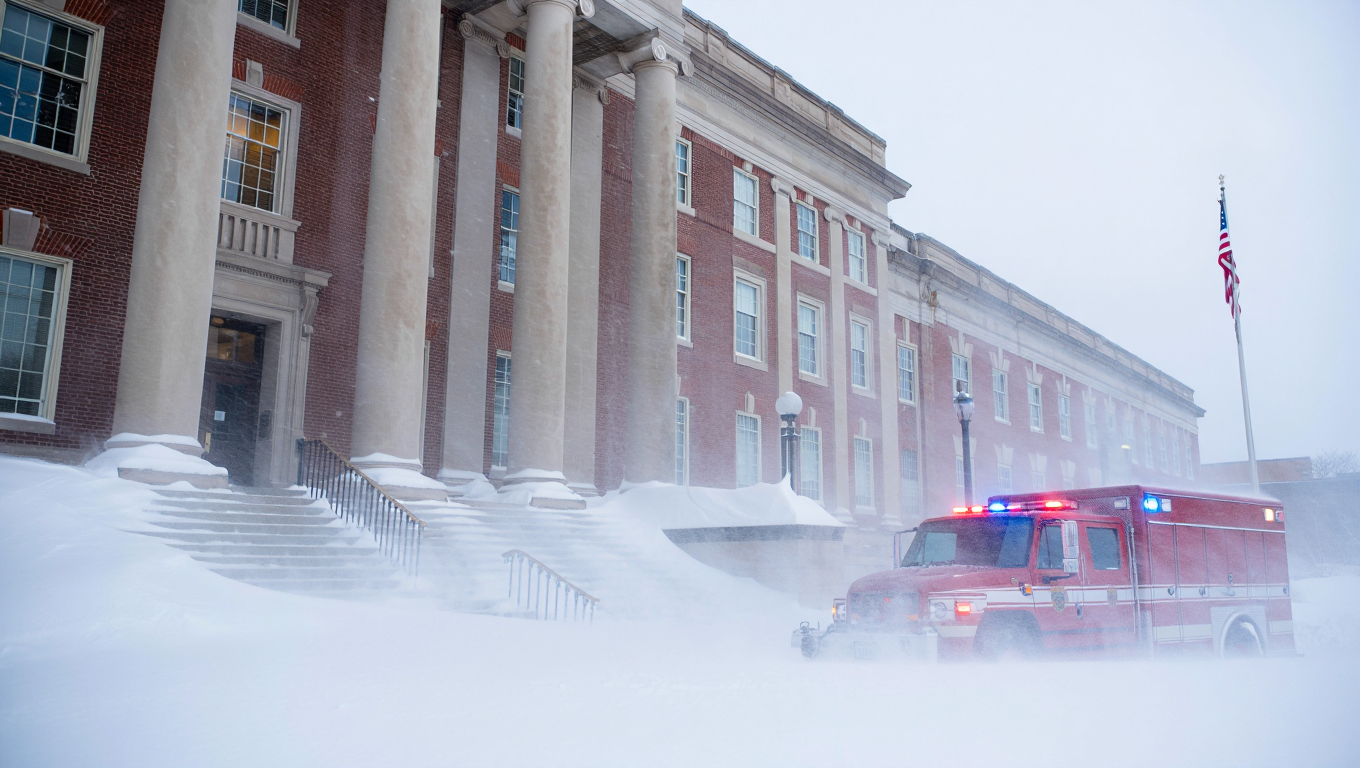
A devastating winter storm has crippled the Northeast, dumping record-breaking snowfall and forcing millions into emergency conditions as travel becomes virtually impossible across major metropolitan areas.
Record-Breaking Snowfall Hits Major Cities
Providence, Rhode Island, bore the brunt of the storm, receiving 33 inches of snow that shattered the previous single-storm record of 28.6 inches set in February 1978. New York’s Central Park accumulated nearly 20 inches, according to the National Weather Service. The massive accumulation has overwhelmed city infrastructure and forced authorities to declare states of emergency across multiple states. High winds and frigid temperatures have compounded the dangerous conditions, making outdoor exposure potentially life-threatening.
Transportation systems have ground to a halt throughout the region. Major highways remain impassable, with authorities urging residents to stay indoors until conditions improve. Airlines have canceled hundreds of flights, stranding passengers in airports across the Northeast corridor. Public transit systems in New York, Boston, and Philadelphia have suspended or severely limited service.
Emergency Response and Public Safety
State and local officials have mobilized emergency response teams to assist stranded motorists and provide shelter for those without adequate heating. Power outages have affected thousands of households, with utility companies working around the clock to restore service. Emergency services report numerous calls for medical assistance, though response times have been significantly delayed due to impassable roads. Grocery stores and pharmacies have struggled to maintain supplies as delivery trucks cannot navigate the treacherous conditions.
Recovery Timeline and Economic Impact
While snowfall has begun to taper off, officials warn that recovery will take several days as crews work to clear major thoroughfares and restore normal operations. The economic impact is expected to be substantial, with businesses forced to close and supply chains disrupted throughout the region. Weather forecasters predict that temperatures will remain below freezing, preventing rapid melting and prolonging the cleanup effort. Parts of Canada’s Atlantic Coast have also experienced significant impacts from the same storm system.
I was born&raised in Iowa, near the Minnesota border. After getting out of the Air Force&being stationed in San Antonio, I decided 2 live here. A wise decision 4 the winter, not so much 4 the summer, but all in all Texas is fine!
Millions TRAPPED Under 20 Inches of Snow !!! Well, if that’s true, I assume they are all dead. Very sad indeed. :o(
Hummm, were you trying to get us to laugh? Anyway, when they live there then that is what they have to deal with. The snowbirds are the “wiser/smarter” ones… They leave those frigid climates that are prone to feet of winter snow and head to Georgia and South Carolina and mostly Florida and spend their winter down there in the comforts of the warmer climates. Being a snowbird isn’t all that cheap, but it sure beats what they are putting up with now up north… Yep, the south has its advantages Ya’ll, and its comforts… To be really comfy go south of Orlando, b/c it can go down into the low 30’s in Jan. and Feb. And north Fl. around White Springs and Lake City can dip into the 20’s in Jan. and Feb. both… Been there, done that.
Millions trapped BY 20″ of snow. Very few trapped UNDER 20″ of snow.