
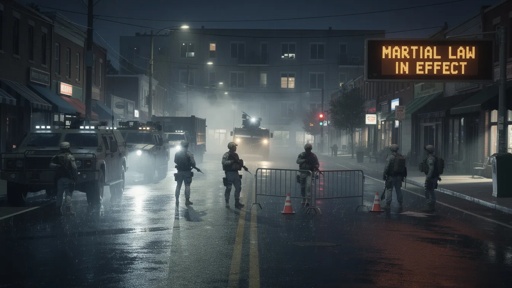
Canada’s Bill C-21, which received Royal Assent in December 2023, is raising alarms among constitutional lawyers who warn it could turn the country into a “police state.” The bill introduces expansive powers for the state, including “red flag” and “yellow flag” provisions that enable authorities to revoke gun licenses based on “reasonable suspicion” of domestic violence or ineligibility. Critics argue that such measures erode due process and civil liberties for gun owners, setting a dangerous precedent.
The bill’s impact on law-abiding citizens and Indigenous hunters is significant. The broad definitions of “protection orders” and the potential for abuse of these powers are key concerns. Experts stress the need for a balance between public safety and Charter rights, yet the bill appears to tip the scales in favor of state control, drawing parallels to previous privacy concerns under anti-terror legislation.
The phased implementation of Bill C-21 has been closely monitored, with the “yellow flag” provisions activating earlier this year. These provisions allow for temporary license suspensions without seizure, raising questions about the potential for overreach. As the mandatory ineligibility and revocation sections come into force, the debate around the bill intensifies, with critics highlighting the risk of arbitrary detention without trial.
Impact on Stakeholders and Public Reaction
The bill’s primary stakeholders include the Liberal government, which sponsors the legislation with the aim of reducing gun crime and intimate partner violence, and the Chief Firearms Officers, tasked with enforcing the new provisions. Gun rights organizations and constitutional lawyers stand in opposition, warning of the bill’s unconstitutional nature and its potential to infringe on Charter rights. Indigenous groups also express concern over the impact on traditional hunting practices.
The public reaction has been polarized, with urban areas showing support for the bill’s safety measures, while rural communities and gun owners express fear over government overreach. The upcoming elections in 2025 are expected to amplify these debates, with the Liberals pushing for stricter control and Conservatives advocating for individual liberties.
Future Implications and Expert Opinions
The long-term implications of Bill C-21 are vast, with potential Charter challenges looming over its enforcement. While the bill aims to prevent intimate partner violence, it risks undermining trust in the state due to its perceived overreach. The economic impact includes compliance costs for businesses and heightened smuggling enforcement at borders.
Industry experts and gun control advocates remain divided. While some praise the bill for addressing public safety concerns, critics argue that its provisions could lead to a slippery slope of increasing state control. The debate underscores the need for careful consideration of both public safety and individual rights in crafting future legislation.
Sources:
Government Gazette on Bill C-21
Public Safety Canada on Firearms Legislation
Wikipedia on Firearms Regulation in Canada
Parliamentary Bill Information on C-21
Criminals will always have guns.
I once had a commercial drivers license and the gov decided to take it away for no reason and leave me with a regular license. It really ticked me off because I had earned it legitimately and too, they gave no refund (I had 6 months left).
Anyway, I don’t think much about gun licenses for the fact they are pulling licenses for no reason other than they apparently can. I won’t play their games!
Its funny how all of these new anti terror laws that have been put on the books in the US and Canada always get turned against the citizens after a short period of time and the government becomes more of a threat to your freedom and safety then the terrorists ever were! All governments are inherently evil and giving them more power over you only emboldens them to use that power against you!! The terrorists don’t ask the governments permission first before they commit acts of terrorism so all these new laws have zero effect upon them!!
Ownership and the ability to use all weapons for defense of persons AND property are God Goven inalienable rights that can not be limited by any legitimate government. This was acknowledged by the father of the first Holy Roman Emperor when he intrepreted the direct order of Jesus The Christ for his followers to replace Jesus as the Shepherd of his flocks to mean t;hat he had to empower his people with training, weaponry, and leadership of. his knights to repel and defeat the Moors and other dangers against; their lives, property and safety of the citizenry. HIs son Charlemagne further designated several knignt families including my Cramm and Wolfe families of knghts to beDefenders of the Faith and Faithful and promoters of public peace and tranquility. I am the sixth generation of eldest son of eldest son of knight Conrad von Cramm who was assigned by Frederick the great and King George 3 to be in the first Hessian Regiment to fulfill that mission. Upon his discovery and report of the British attrocities against the German Lutheran colony in New Ebenezer GA.. Great Britain and King George were ordered to end the war peacefully, pay reparations for all the stolen assets, and to punish the murdeerers of Senior Pastor Ravenhorst/Rabenhorst and many of his church elders burned to death in the ChURCH PARSHONAGE. KING GEORGE 3 WENT TO PARLIAMENT TO SO ORDER AND PEACE COMMISSION TO END THE WAR IN 1779. THIS 3 MAN COMMISSION MET WITH GENERAL HENRY LEE WHOSE HANDWRITTEN AGREEMENT TO END THE WAR WITH THE COLONIES ACCEPTING COMMONWEALTH STATUS IS NOW IN THE BRTISH NAVAL ARCHIVES PER THE HISTORY CHANNEL. FROM THAT TIME FORWARD, NO CONTINENTAL ARMY GENERAL EVER. WON ANOTHER BATTLE. IN FACT GEN. BENJAMIN LINCOLN TWICE TRIED TO GIVE UP CHARLESTON, GENERAL GATES ORDERED THE SOUTHERN CONTINENTAL TO WALK INTO A TRAP AT CAMDEN AND DESERT COLONEL DEKALB DURING THE MASSACRE TO HIS DEATH. MY ANCESTORS FOUGHT AND WON THE BATTLE OF KINGS MTN WITHOUT ANY CONTINENTAL GUNS, SOLDIERS, OFFICERS, FUNDS, OR PERMISSION. THAT BATTLE FOUGHT ON MY ANCESTOR COL. FREDERICK HAMBRIGHT’S LAND ON TOP OF KINGS MTN. RESULTED IN THE WINNING OF 1145 NEW BROWN BETSY MUSKETS, BAYONETS, POWDER, LEAD, AND SOME NEW MEN TO THE FORCE. THESE 1145 MUSKETS WERE THE NECESSARY WEAPONRY THAT GAVE THE SOUTHERN “OVER THE MOUNTAIN MEN” AND THE SOUTH MOUNTAIN BOYS TO LATER WIN THE DECISIVE BATTLE AT COWPENS DURING WHICH TARLETON LOST 90 % OF HIS CALVARY PLUS HIS WAGONS, CHEST OF GOLD, BLACKSMITH FORGE. AND PROOF THAT GENERAL GREENE HAD NOTIFIED CORNWALLIS AS TO WHERE DANIEL MORGAN AND HIS MEN WERE GOING BEFORE MORGAN LEFT FOR COWPENS. 60 OF THOSE CAPTURED CALVARY HORSES BECAME THE FIRST NC CALVARY COMMANDED BY CONRAD CRAMM USING HIS ALIAS THE BARON DE GLAUBECK (THE BARON OF THE FAITHFUL AS an acknowledgement of the New Ebenezer GA murders and confiscations). Daniel Morgan left before the Guilford courthouse battle because he knew he and the southern militia troops were going to be anhilitated by Greene deserting them just as Gates had done De Kalb and Capt. Nelson had done to Malmady, and Benjamin Lincoln had done to Pulaski at SAvannah, and the assassination of Luzon that DAniel Morgan prevented later. George wAshington was kept in the dark about Yorktown until the 1800 wagons, 4000 French Infantry, and Spanish chests of golld arrived near NY city. At that time General Rochembeau read the riot act to Washington who pitched a fit because his plan was to attack NY City and get defeated by the British troops and fleet kept at NY City to repel that invasion. George WAshington only provided 1250 troops to join the 4000 French from RI and another over 4000- troops,seige guns, and munitions from the French fleet. The southern militias who had served notice that they were no longer going to serve under Washington or any of his generals agreed to serve under French General LaFayette as about 3500 mostly miliia and survivorrrs of Gates’ defeat, plus about 3000 VA troops under General Pdeer Muhlenburg. Nathaniel Greene was banned from being in VA. Armand had a large group of Hessians who switched sides at Winchester VA and served as VA German militias. George Washington refused to allow them to join the Continental Army. So, who planned the Yorktown victory? France and SPAIN. SPAIN AGREED TO USE THEIR FLEET TO PROTECT THE FRENCH. WEST INDiES WHILE THE FRENCH FLEET WENT TO Yorktown..
WE must demand that the term gun violence cease being used to justify banning guns; Guns and other weaponry are tools to oppose violence and confiscation of property and intimidation by tyrants, pirates, Vikng marauders. Muslim Moors expanding their conquests, and dictators who seek to take control of everyone. Use of weaponry to oppose such attacks on the population should be called defending the nation and its people as promised by our citizenship oath to Protect and defend the Constitution and the nation from all enemies both foreign and domestic most of us have sworn to do.
You have a most impressive family tree. I know only a few names of my ancestry, but nothing about what they did during their lives. I may have to dig deeper. Thank you for such history. Merry Christmas and Happy New Year!