
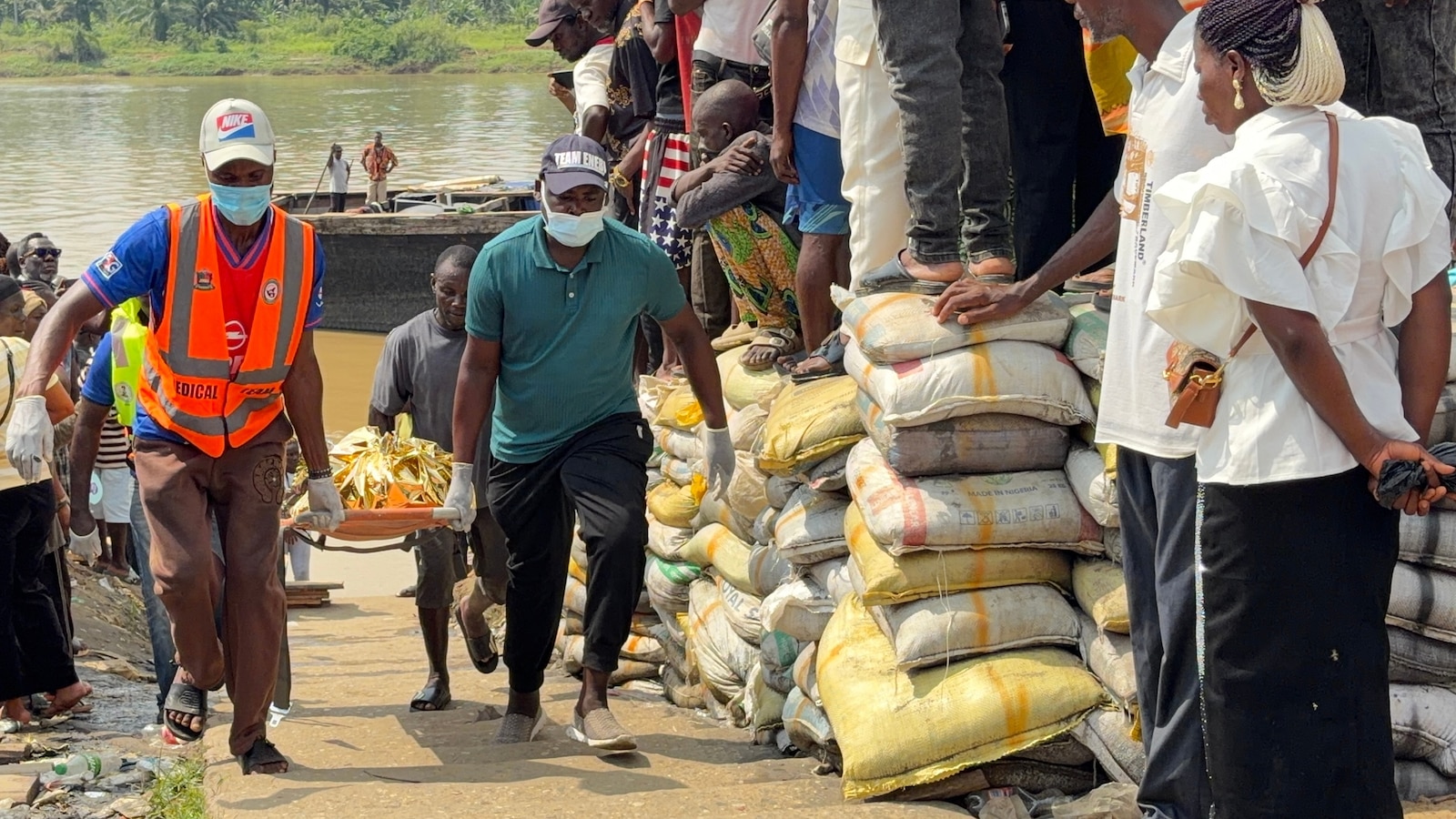
A boat carrying passengers to a funeral ceremony capsized in southern Nigeria on Friday, killing at least 24 people and prompting authorities to detain the vessel’s manager after the operator allegedly fled the scene.
Deadly Journey Ends in Tragedy
The vessel sank in Bayelsa State in Nigeria’s South South region while transporting passengers between communities for a burial ceremony. Emergency officials confirmed the death toll while search and rescue teams continued operations to locate additional victims. Another 24 passengers survived the incident and received medical treatment, according to local police spokesman Musa Mohammed. Authorities have not disclosed the total number of people aboard the vessel or how many remain missing.
Preliminary investigations point to mechanical failure as the likely cause of the disaster. Mohammed reported that passengers recognized the boat’s distress and requested the operator steer toward shore, but he refused their pleas. Following the capsizing, the boat operator abandoned the scene while law enforcement took the vessel’s manager into custody for questioning.

ndtv.com/world-news/24-…

Pattern of Preventable Disasters
The tragedy highlights Nigeria’s ongoing struggle with waterway safety, where boat accidents occur with alarming regularity. Inadequate enforcement of maritime regulations allows faulty vessels to operate without proper safety equipment, including life jackets. Many boats exceed passenger capacity limits while operators ignore speed restrictions and basic safety protocols. These violations create dangerous conditions for communities that rely on water transportation as a primary means of travel between settlements.
Bayelsa Commissioner for Information Ebiuwou Koku-Obiyai issued a statement Saturday urging comprehensive adherence to safety standards. The official condemned practices that endanger passengers, emphasizing that overloading vessels, excessive speed, reckless operation, and traveling without life jackets must end immediately. The commissioner stressed that no journey justifies risking human life, calling for stricter compliance from both operators and passengers.
Systemic Safety Failures
The incident underscores fundamental governance challenges in enforcing basic safety standards across Nigeria’s waterways. When regulations exist on paper but lack consistent enforcement, citizens pay the ultimate price. This disaster follows a familiar pattern where mechanical problems, operator negligence, and absent safety equipment combine with deadly results. For families who lost loved ones traveling to honor the deceased at a funeral, the tragedy compounds their grief. The state’s response focuses on urging compliance, though questions remain about concrete enforcement measures that could prevent future catastrophes and hold operators accountable before disasters occur.