
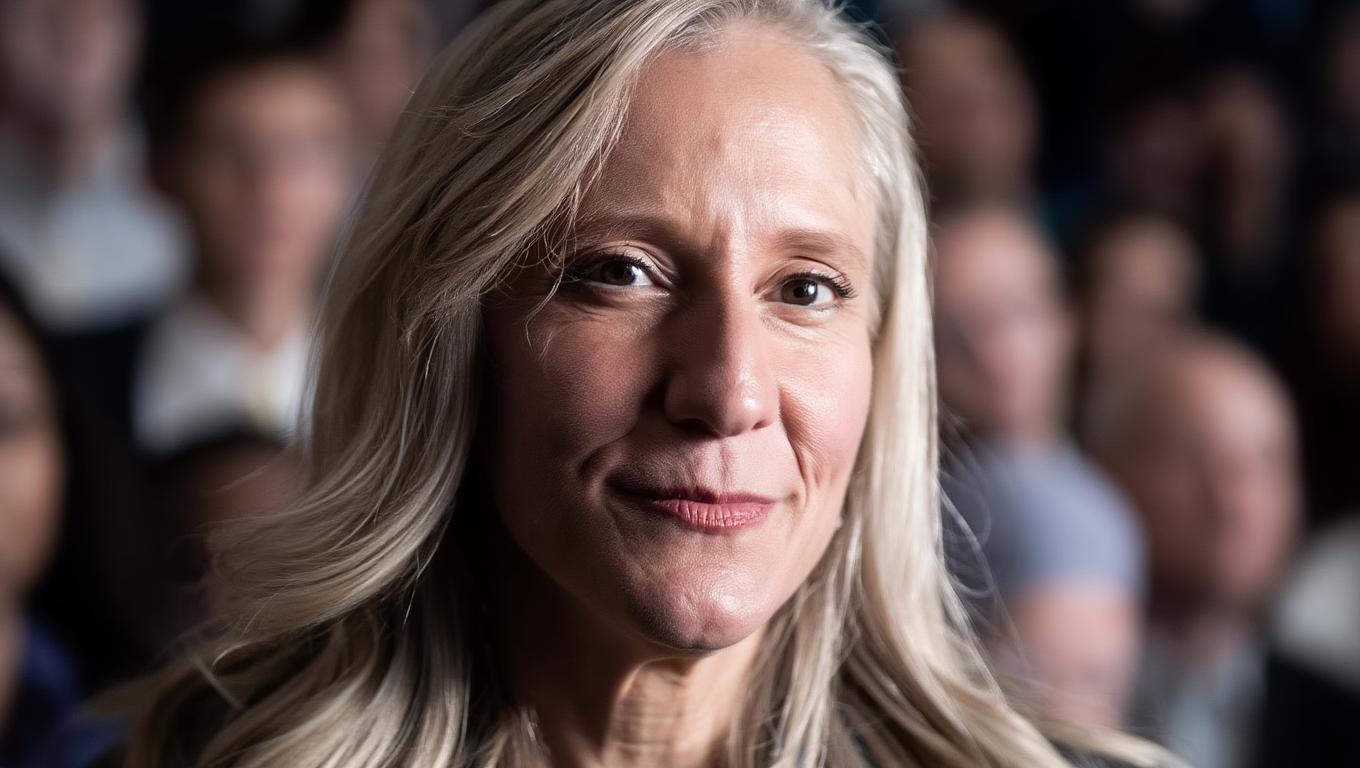
Richmond witnessed a historic moment on Monday as Abigail Spanberger was sworn in as Virginia’s 74th governor, marking the culmination of a remarkable political journey from intelligence operative to congressional representative to the Commonwealth’s highest office.
The inauguration ceremony at the State Capitol drew hundreds of dignitaries, state officials, and Virginia residents who gathered to witness Spanberger officially assume the governorship. The 47-year-old Democrat brings a unique blend of national security expertise and legislative experience to the executive mansion, following her successful campaign that emphasized pragmatic governance and bipartisan cooperation.
Spanberger’s ascension to the governorship represents a significant political milestone for Virginia Democrats, who have maintained their grip on statewide offices amid shifting political dynamics across the nation. Her victory in November demonstrated her ability to appeal to voters across Virginia’s diverse geographic and political landscape, from the Northern Virginia suburbs to rural counties in the state’s southern regions.
From Langley to Richmond: A Unconventional Political Path
The new governor’s background distinguishes her from many of her predecessors. Before entering politics, Spanberger spent nearly a decade as a CIA operations officer, conducting classified work overseas that she has described as formative in shaping her worldview and problem-solving approach. This experience, combined with her eight years representing Virginia’s competitive 7th Congressional District, has positioned her as a politician comfortable operating in high-stakes environments.
During her tenure in Congress, Spanberger earned a reputation as a moderate Democrat willing to break with party leadership when she believed it served her constituents’ interests. She frequently emphasized fiscal responsibility and supported measures aimed at strengthening national security while advocating for healthcare access and infrastructure improvements.
BREAKING: Abigail Spanberger's first act as Governor of Virginia is to repeal Glenn Youngkin's executive order that mandated state and local law enforcement cooperate with immigration enforcement.
Elections have consequences. pic.twitter.com/RieZ6ToQWx
— Greg Price (@greg_price11) January 17, 2026
Her congressional record included notable victories on prescription drug pricing, veterans’ affairs, and agricultural policy—issues that resonated strongly with voters in her former district, which spans from Richmond’s suburbs to rural farming communities. These accomplishments likely contributed to her statewide appeal during the gubernatorial campaign.
Inaugural Address Focuses on Unity and Economic Growth
In her inaugural address, Spanberger outlined an ambitious agenda centered on economic development, education reform, and infrastructure modernization. She emphasized the need for Virginia to remain competitive in attracting businesses and talent while ensuring that growth benefits communities across the state.
“Virginia stands at a crossroads,” Spanberger declared during her speech. “We can choose to move forward together, building bridges instead of walls, creating opportunities instead of obstacles, and solving problems instead of perpetuating partisan gridlock.”
The governor’s remarks notably avoided divisive partisan rhetoric, instead focusing on practical solutions to challenges facing Virginia families. She highlighted plans to expand broadband access in rural areas, invest in workforce development programs, and strengthen the state’s position as a technology and defense contracting hub.
Education emerged as a central theme, with Spanberger proposing increased funding for public schools and community colleges. She also addressed Virginia’s housing affordability crisis, particularly in high-growth areas around Washington, D.C., and Richmond, promising initiatives to increase affordable housing options for working families.
Political Implications and National Attention
Spanberger’s inauguration has drawn attention beyond Virginia’s borders, as political observers view her governorship as potentially significant for national Democratic strategy. Her success in winning statewide office while maintaining moderate positions could serve as a model for Democrats seeking to compete in purple states across the country.
First it was Mamdani in New York City, placing his hand on the Quran, while being sworn in as Mayor.
Now it’s Virginia’s Lt. Governor being sworn in using the Quran.
Do you get it now? This is exactly how they took over the United Kingdom. pic.twitter.com/DTMpz8BOGC
— Based Bandita (@BasedBandita) January 19, 2026
The timing of her inauguration comes as Virginia continues to play a crucial role in national politics. The state’s proximity to Washington, D.C., its diverse economy, and its status as a political battleground make the governor’s mansion a prominent platform for testing policy ideas and building national political profiles.
Political analysts note that Spanberger’s background in national security could prove valuable as governors increasingly grapple with cybersecurity threats, infrastructure protection, and coordination with federal agencies on various issues. Her CIA experience may also enhance Virginia’s ability to compete for federal contracts and military installations.
Challenges Ahead for the New Administration
Despite the celebratory atmosphere surrounding her inauguration, Spanberger faces significant challenges as she begins her gubernatorial term. Virginia’s economy, while generally strong, continues to grapple with post-pandemic recovery issues, including workforce shortages in key sectors and supply chain disruptions affecting businesses statewide.
The new governor must also navigate a complex political environment, working with a state legislature where partisan divisions remain pronounced on several key issues. Her success will likely depend on her ability to build coalitions and find common ground on contentious topics such as tax policy, environmental regulations, and social issues.
Transportation infrastructure represents another major challenge, particularly in Northern Virginia, where traffic congestion and aging systems strain economic growth and quality of life. Spanberger has promised to prioritize infrastructure investments, but funding mechanisms and project prioritization will require careful negotiation with lawmakers.
Breaking Barriers and Setting Precedents
Spanberger’s inauguration also carries symbolic significance as she becomes one of relatively few former intelligence officers to hold a governorship. Her unique background brings a different perspective to state government, potentially influencing how Virginia approaches issues ranging from cybersecurity to economic development.
The ceremony itself reflected Virginia’s rich history and traditions, with Spanberger taking the oath of office on the same Capitol steps where numerous predecessors have begun their terms. The juxtaposition of historical tradition with her groundbreaking background underscored the evolving nature of American political leadership.
As Spanberger begins her four-year term, Virginia residents and political observers nationwide will be watching to see how her distinctive background translates into governance. Her success or challenges could influence future campaigns by candidates with non-traditional political backgrounds and shape discussions about the skills and experience most valuable in executive leadership.
The new governor’s inauguration marks not just a personal achievement but also a new chapter in Virginia’s political evolution, as the Commonwealth continues to play an outsized role in shaping national political trends and policy discussions.
Spanberger will ruin Virginia just like Hobbs is aggressively ruining Arizona. Doesn’t matter what her background is, she’s a Democrat/Socialist now; her first act repealing state and local law enforcement working with federal law enforcement is just the beginning. Virginia dug itself out of many deep holes under Youngkin, especially education, it won’t take long at all for Spanberger to reverse all that and put VA back at the bottom of so many lists.