
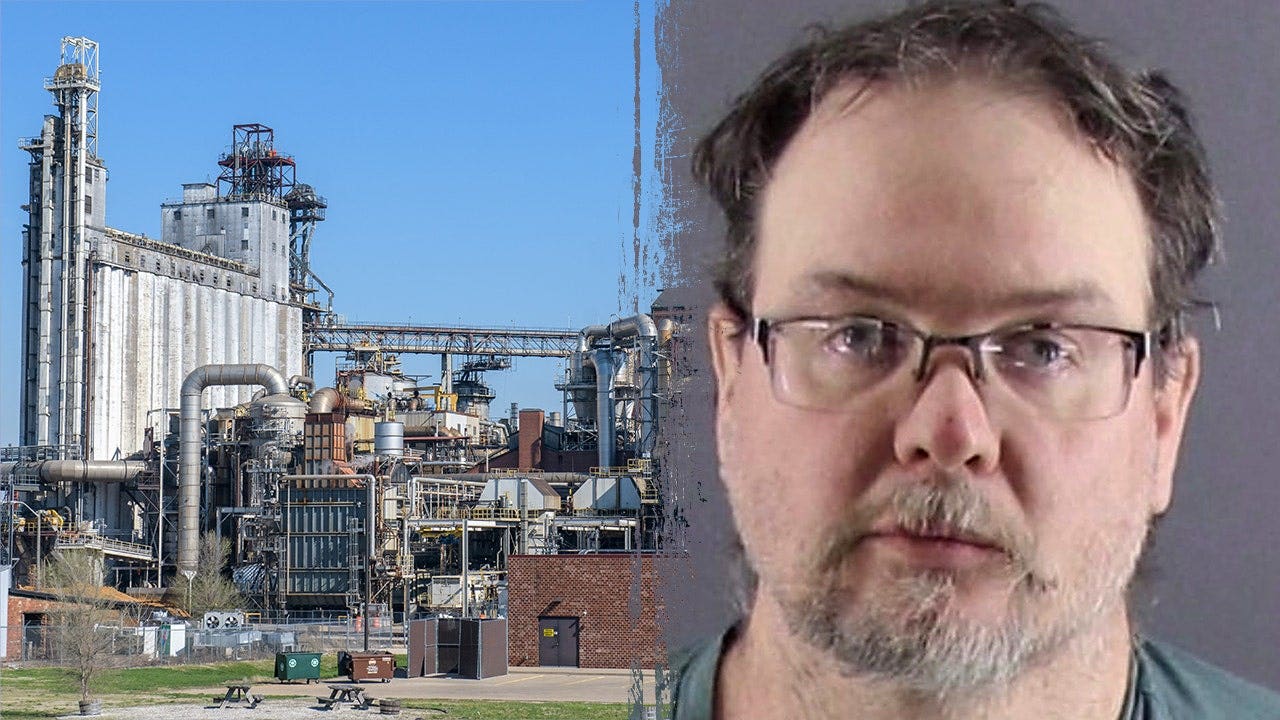
An Illinois ethanol plant worker remains in federal custody after authorities discovered bomb-making files and facility maps during searches of his home and vehicle, following a threat that forced nearly 2,500 homes and businesses to evacuate for almost 24 hours across Peoria and East Peoria.
Digital Trail Connects Suspect to Threat
Federal prosecutors presented evidence linking the suspect to a November 13 email warning sent to BioUrja plant employees. Security cameras captured the accused arriving at a Peoria grocery store at 9:45 a.m. that morning. Within 15 minutes, someone using the store’s public Wi-Fi created an email account under the name Jake Armitage, an alias the suspect’s wife confirmed he had previously used on Facebook. The threatening message went out at 10:16 a.m., just two minutes before cameras showed him entering the store.
Investigators traced the email account’s activity back to an internet address at the suspect’s Chillicothe home. License plate cameras captured his vehicle leaving the grocery store parking lot after he checked out at 10:31 a.m., completing the digital timeline prosecutors built to establish his connection to the threat.

Physical Evidence Recovered From Searches
FBI agents conducting a November 16 search of the suspect’s residence recovered rechargeable AA batteries, copper sheeting, wiring, and white tape. These materials matched components from a partially damaged device discovered near a tank at the plant. That device contained an unidentified powdery substance and included timer or remote-control parts, according to court testimony.
Agents also seized a laptop missing its hard drive. The drive was later found inside the suspect’s vehicle alongside a detailed map of the BioUrja facility. Files stored on the hard drive contained information about shaped-charge explosives, blasting cap wells, and videos demonstrating copper-based explosives. Investigators also uncovered internet searches for ethanol tank explosion videos and a 2023 industrial ethanol plant explosion investigation.
Swift Response Prevents Potential Disaster
FBI Special Agent in Charge Ryan Presley praised the rapid coordination between the FBI, Peoria Police Department, and ATF that led to the suspect’s quick capture. Bill Daly, a former FBI investigator who worked on the 1993 World Trade Center bombing, noted that bombers intending mass casualties rarely provide advance warnings, suggesting investigators will examine whether workplace grievances motivated the threat or if the sender sought recognition for exposing security vulnerabilities.
Public defenders argued the seized items were common household materials and emphasized prosecutors have not charged their client with constructing or planting any device. Daly explained federal prosecutors often file threat charges initially to maintain custody while forensic testing continues, with additional charges possible as evidence analysis progresses.