
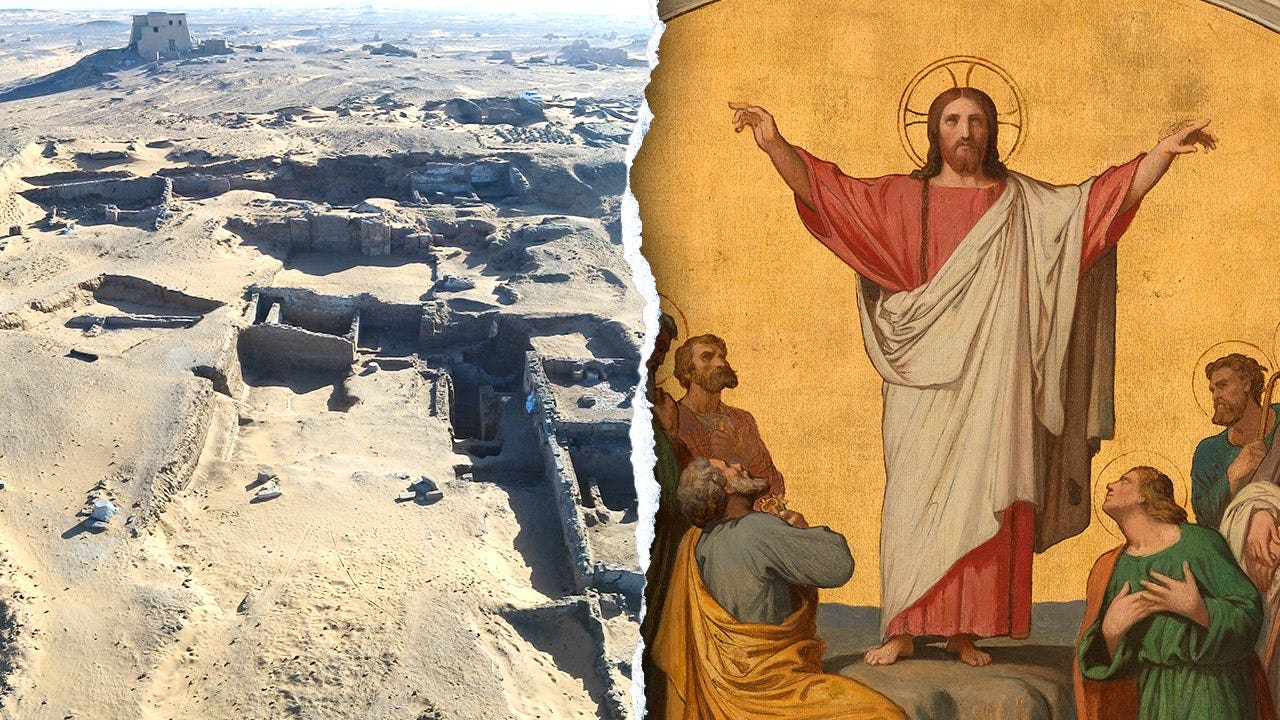
Archaeologists have uncovered the original floor of a massive medieval Christian church in northern Sudan that rivals the White House in size, revealing new details about one of Africa’s most significant early Christian civilizations.
Largest Church in Medieval Nubia Revealed
A Polish-Sudanese archaeological team made the discovery in November while excavating the Great Church of Jesus in Old Dongola, located on the eastern bank of the Nile River. The researchers found a staircase flanked by 36-foot-high walls that led them down to the church’s original floor level. The structure measures approximately 154 feet wide and 187 feet long, exceeding the dimensions of the White House in Washington, D.C.
The church dates back to the 9th century and was constructed during the reign of the Makuria kingdom, which governed the ancient Nubian region. Archaeologists first located the church in 2021, but most of the structure remains buried underground and awaits further excavation.


Architectural Significance Compared to Historic Landmarks
Artur Obluski, who leads the archaeological mission, described the church as a potential architectural trendsetter for medieval Africa. He compared its construction techniques and spatial design to the Hagia Sophia in Istanbul, the famous 6th-century church that Muslim forces converted to a mosque in 1453. The researcher suggested the Great Church of Jesus may have served a similar influential role in Nubian architecture and possibly throughout the broader African region during the medieval period.
Nubia encompassed territories that now form parts of southern Egypt and northern Sudan. Multiple African civilizations ruled this region throughout ancient history, leaving behind substantial archaeological evidence of advanced Christian communities that flourished before the Arab conquest.
Part of Broader Pattern of Early Christian Discoveries
The Sudanese finding adds to several major Christian archaeological discoveries made this year along the Nile Valley. Earlier in the year, researchers in Egypt’s Dakhla Oasis uncovered a complete fourth-century Byzantine-era Christian settlement featuring a mud-brick basilica, residential structures, and a church deacon’s home. Another Egyptian excavation revealed an ancient Christian monastic complex that provided insights into religious life before Arab forces arrived in the region.
These discoveries continue to reshape understanding of early Christianity’s spread and influence across North Africa. The Great Church of Jesus stands as testament to the sophisticated building capabilities and religious devotion of medieval Nubian society.