
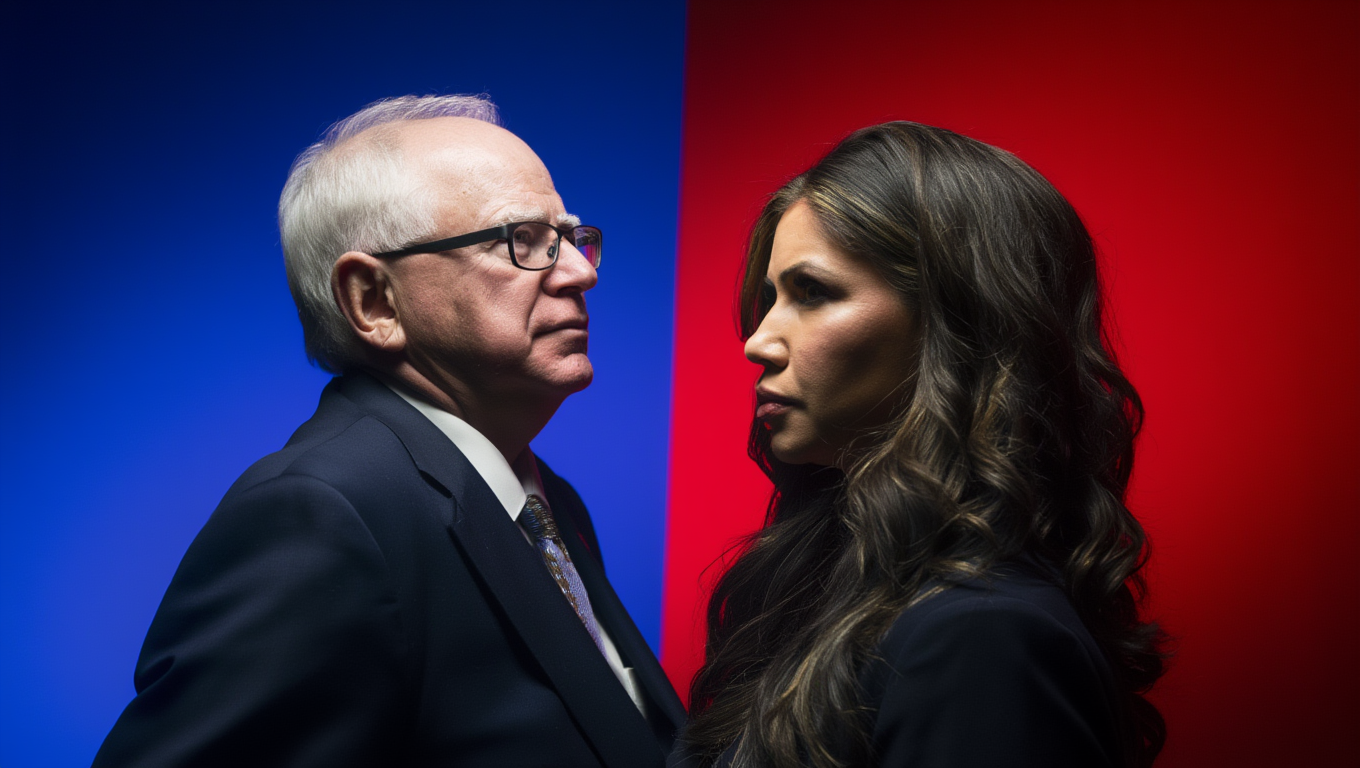
The streets of Minneapolis filled with demonstrators Thursday as the city grappled with the aftermath of a fatal shooting involving an Immigration and Customs Enforcement agent during a federal immigration enforcement operation. The incident has ignited a fierce political battle between state and federal authorities over investigative jurisdiction and accountability.
Renee Nicole Macklin Good, a 37-year-old mother of three who had recently relocated to Minnesota, was killed Wednesday during what federal officials describe as part of the Trump administration’s expanded immigration enforcement initiative. The shooting has sent shockwaves through the Twin Cities community and reignited national debates over federal immigration tactics.
"I've issued a warning order to prepare the Minnesota National Guard. We have soldiers in training and prepared to be deployed, if necessary."
So to be clear, Walz will bring out the National Guard to fight ICE but not to stop BLM & Antifa rioterspic.twitter.com/9skUQd3Exu
— Ari Hoffman 🎗 (@thehoffather) January 7, 2026
Federal-State Standoff Over Investigation
Minnesota Governor Tim Walz has demanded state participation in the investigation, but his efforts have hit a wall. The Minnesota Bureau of Criminal Apprehension revealed Thursday that the U.S. Attorney’s Office has blocked state investigators from participating in the inquiry, creating an unprecedented jurisdictional dispute.
This exclusion represents a significant departure from typical protocol for officer-involved shootings in Minnesota, where state agencies routinely collaborate with federal counterparts in investigations. The move has intensified criticism from state officials who argue that transparency and independent oversight are essential for maintaining public trust.
The federal government’s decision to maintain exclusive control over the investigation reflects the broader tensions between the Trump administration’s immigration enforcement priorities and state-level resistance to federal operations. Minnesota has historically positioned itself as a sanctuary-friendly state, creating natural friction with aggressive federal immigration policies.
Homeland Security Chief Defends Shooting
Homeland Security Secretary Kristi Noem has mounted a vigorous defense of the ICE officer’s actions, characterizing Good’s behavior as “domestic terrorism” in a statement that has drawn sharp criticism from civil rights advocates. Noem insisted that the officer acted within training protocols and that a thorough investigation would vindicate the agent’s actions.
The terrorism designation represents an escalation in rhetoric that legal experts say could prejudice any future proceedings. By framing the incident in national security terms, federal officials appear to be laying the groundwork for justifying the use of deadly force, regardless of the specific circumstances that led to Good’s death.
Noem’s comments also reflect the administration’s broader strategy of characterizing resistance to immigration enforcement as a threat to national security. This approach has been criticized by civil liberties organizations as an attempt to criminalize legitimate dissent and community defense activities.
THERE IT IS 🚨 Official hearing in Minnesota reveals Tim Walz BLOCKED INVESTIGATIONS into “high priority” fraud cases
– He SHUT DOWN criminal investigations
– No new criminal investigations allowed
– They changed the name from “calling it fraud to calling it over billing”
– They… pic.twitter.com/8omnsLyUNb— Wall Street Apes (@WallStreetApes) January 8, 2026
Community Response and Memorial
A makeshift memorial has emerged at the shooting site, where community members have gathered to honor Good’s memory and demand answers about the circumstances of her death. The memorial features flowers, candles, and handwritten messages from residents expressing grief and calling for justice.
Protesters also assembled outside the Bishop Henry Whipple Federal Building, where tensions with law enforcement were evident. Images from the scene show demonstrators requiring medical attention, including at least one protester who needed to flush their eyes with water after confrontations with federal agents.
The presence of U.S. Border Patrol Commander Gregory Bovino at the federal building underscores the multi-agency nature of the current immigration enforcement operations. Border Patrol agents have increasingly been deployed to interior enforcement activities under the current administration’s expanded immigration strategy.
Community leaders have expressed frustration not only with the shooting itself but also with the lack of immediate information provided to the public. The federal government’s tight control over details has fueled speculation and conspiracy theories, complicating efforts to maintain calm while seeking accountability.
Immigration Enforcement Context
The shooting occurred during what federal officials describe as intensified immigration enforcement operations across multiple states. The Trump administration has significantly expanded ICE operations, deploying agents to communities that had previously seen limited federal immigration activity.
These operations represent a marked shift from previous enforcement strategies, with agents now conducting broader sweeps in residential areas rather than focusing primarily on individuals with serious criminal records. The expanded scope has increased the likelihood of encounters between federal agents and community members who may not be direct targets of enforcement actions.
Minneapolis, with its large immigrant population and sanctuary-friendly policies, has become a focal point for these enforcement efforts. The city’s Somali community, in particular, has reported increased anxiety about federal immigration activities, though it remains unclear whether Good’s case was connected to these broader community concerns.
🚨 JUST IN: THOUSANDS of leftists chant "KRISTI NOEM WILL HANG" in the middle of New York City
"Save a life, k*ll ICE"
Holy crap.
And Democrats endorse this rhetoric.
THE ORGANIZERS OF THIS MUST BE IMPRISONED! pic.twitter.com/9C2ELkqBYw
— Eric Daugherty (@EricLDaugh) January 9, 2026
Legal and Political Implications
The jurisdictional dispute over the investigation could have far-reaching implications for federal-state relations in law enforcement matters. Legal experts note that while federal agencies typically have authority over their own personnel, state agencies often play crucial roles in investigating incidents that occur within their boundaries.
The exclusion of state investigators may complicate any potential prosecution, as local prosecutors often rely on state agency investigations to build cases. If federal authorities ultimately decline to pursue charges, the lack of a parallel state investigation could limit accountability options.
Governor Walz’s public demands for state involvement also represent a political calculation, allowing him to position Minnesota as resistant to federal overreach while addressing community concerns about transparency. The governor’s stance reflects broader Democratic opposition to the administration’s immigration policies.
National Immigration Debate
The Minneapolis shooting has quickly become a flashpoint in national discussions about immigration enforcement methods and federal authority. Civil rights organizations have seized on the incident as evidence of the dangers posed by militarized immigration enforcement, while administration supporters argue that resistance to federal operations creates dangerous situations.
The case also highlights the human cost of immigration policy disputes, with Good’s death serving as a stark reminder that enforcement actions affect real families and communities. Her status as a mother of three has particularly resonated with critics who argue that current enforcement methods are disproportionately harmful to families.
As investigations continue and community tensions remain high, the Minneapolis shooting appears likely to influence broader debates about immigration policy and federal law enforcement authority. The outcome of the federal investigation and any subsequent legal proceedings will be closely watched by communities across the country facing similar enforcement operations.
The incident underscores the complex intersection of immigration policy, law enforcement practices, and community relations in an era of heightened federal enforcement activity. As Minneapolis continues to grapple with the aftermath of Good’s death, the case serves as a microcosm of broader national tensions over immigration and federal authority.