
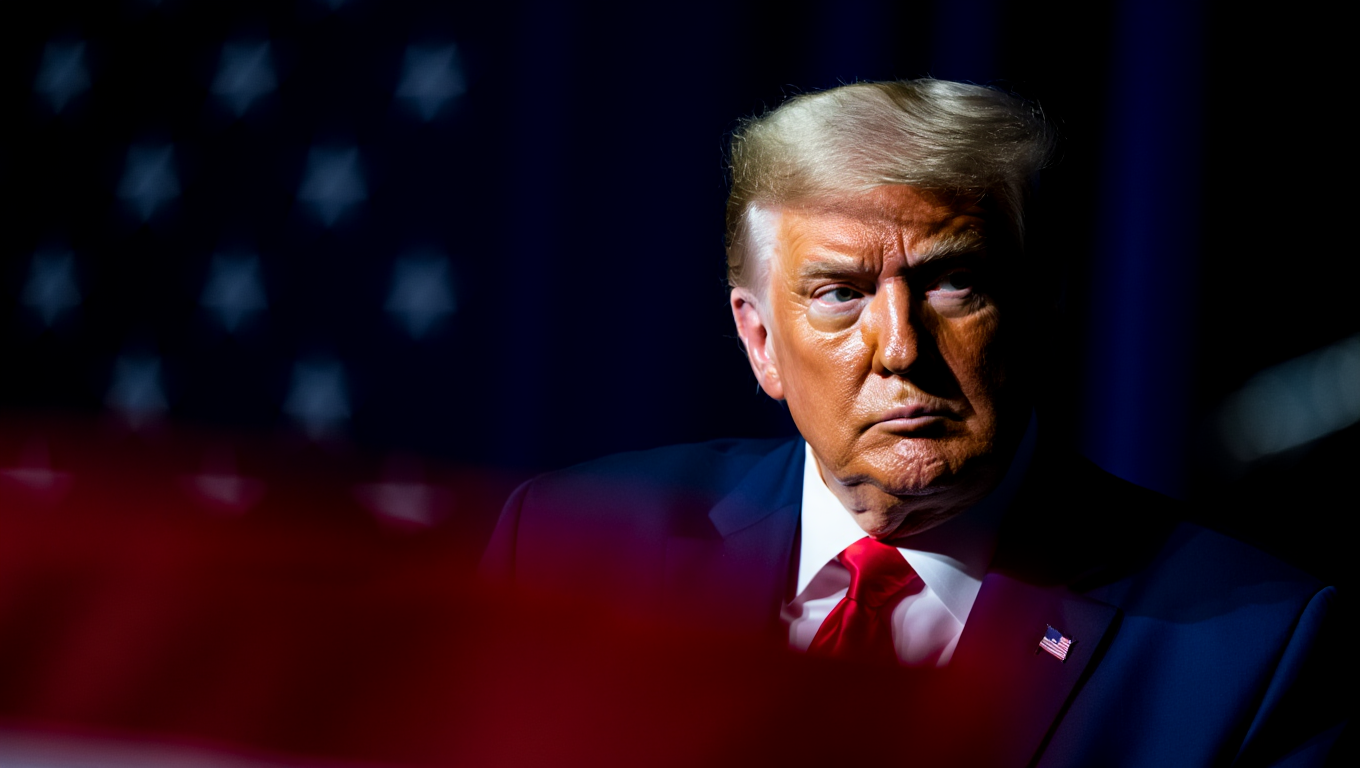
President Donald Trump issued a statement Wednesday evening regarding a fatal shooting involving Immigration and Customs Enforcement officers in Minneapolis, where an agent shot and killed a woman who allegedly attempted to strike officers with her vehicle during enforcement operations.
The incident, which the Department of Homeland Security has classified as domestic terrorism, occurred during what officials described as targeted ICE operations in the Minneapolis area. Video footage circulating on social media platforms shows the moments leading up to and during the shooting, capturing a chaotic scene that has drawn national attention.
Presidential Response and Analysis
In a detailed post on his Truth Social platform, President Trump characterized the incident as a clear case of self-defense by federal law enforcement. The president stated he had reviewed video evidence of the confrontation and described the events as “horrible to watch.”
Trump’s statement emphasized what he termed the “violent, willful, and vicious” nature of the driver’s actions, asserting that the woman deliberately targeted the ICE officer with her vehicle. The president’s language reflected his administration’s broader stance on supporting federal immigration enforcement operations and protecting law enforcement personnel.
🚨 HOLY CRAP! A LONE PATRIOT just showed up to the anti-ICE riots in Minneapolis, federal agents took HIS SIDE and PUMMELED a leftist to the ground who was violently intimidating him
Let’s go 🔥🔥🔥
We have their backs, they have ours! 🇺🇸
— Eric Daugherty (@EricLDaugh) January 8, 2026
The president also addressed the condition of the injured ICE agent, noting that despite the severity of the incident, the officer survived and is currently receiving medical treatment. Trump described the agent’s survival as remarkable given the circumstances captured in the video footage.
Official Government Response
The Department of Homeland Security released a statement categorizing the incident as an act of domestic terrorism, marking a significant escalation in how federal authorities are framing resistance to immigration enforcement operations. This classification carries important legal and policy implications for how similar incidents may be prosecuted and investigated.
According to DHS officials, ICE agents were conducting routine targeted enforcement operations when they encountered organized resistance from protesters. The situation escalated when one individual allegedly used her vehicle as a weapon against federal officers.
“An ICE officer, fearing for his life, the lives of his fellow law enforcement and the safety of the public, fired defensive shots,” the DHS statement read, emphasizing the agency’s position that the shooting was justified under federal use-of-force guidelines.
Video Evidence and Investigation
Multiple angles of video footage have emerged showing the incident from different perspectives. The recordings appear to show a vehicle accelerating toward ICE personnel, followed by gunfire. Physical evidence, including what appears to be a bullet hole in the vehicle’s front windshield, supports official accounts of the shooting’s trajectory and circumstances.
This angle of the ICE involved shooting in Minneapolis clearly shows there was an agent in front of the car she tried to run over and was shot as a result. pic.twitter.com/U14EvfLY27
— Gays For Trump (@GaysForTrump) January 7, 2026
The availability of video evidence from multiple sources has provided investigators with comprehensive documentation of the incident, though the footage has also sparked debate about the appropriate level of force used and the circumstances leading to the confrontation.
Law enforcement analysts note that vehicle-ramming incidents have become an increasing concern for federal agents conducting immigration enforcement, particularly in areas where such operations face community opposition.
Broader Context of Immigration Enforcement
This incident occurs against the backdrop of intensified immigration enforcement under the Trump administration’s renewed focus on deportation operations. ICE activities in major metropolitan areas have frequently drawn protesters and community resistance, creating tense situations for federal agents.
The Minneapolis shooting represents one of the most serious escalations in confrontations between immigration enforcement officers and community members opposing their operations. Previous incidents have typically involved verbal confrontations or peaceful civil disobedience rather than allegations of vehicular assault.
Immigration advocacy groups have expressed concern about the militarization of immigration enforcement, while law enforcement organizations have emphasized the dangers their officers face during routine operations.
Political Implications
President Trump’s response to the incident aligns with his administration’s consistent messaging about supporting law enforcement and characterizing opposition to immigration enforcement as radical extremism. His statement specifically blamed what he termed the “Radical Left” for creating dangerous conditions for federal agents.
Minneapolis Mayor Jacob Frey just sided with a terrorist who tried to kill ICE agents with her car.
He then told ICE to get the f*ck out.
Trump should send in federal agents to arrest Frey who is calling for violence against federal agents.
— Real Defender (@real_defender) January 7, 2026
The president’s framing of the incident as part of a broader pattern of violence against law enforcement reflects his political strategy of positioning his administration as the defender of public safety and order. This messaging resonates with his political base while drawing criticism from civil rights advocates.
Democratic lawmakers and immigration advocacy organizations are likely to scrutinize the incident and call for investigations into ICE tactics and use-of-force policies. The domestic terrorism classification by DHS may become a particular point of political contention.
Legal and Investigative Processes
Federal authorities have initiated multiple investigations into the shooting, including reviews by DHS internal affairs, the FBI, and local law enforcement agencies. These investigations will examine whether the use of deadly force complied with federal guidelines and constitutional standards.
The domestic terrorism classification adds complexity to the legal proceedings, potentially involving additional federal agencies and resources in the investigation. This designation may also influence how prosecutors approach any related charges against other individuals involved in the protest.
Legal experts note that officer-involved shootings during federal operations are subject to different investigative protocols than local police shootings, often involving multiple oversight bodies and extended review processes.
Community Impact and Response
The shooting has heightened tensions in Minneapolis, a city that has experienced significant unrest related to police use of force in recent years. Community leaders are calling for transparency in the investigation and accountability in federal law enforcement practices.
Local officials must navigate the complex relationship between federal immigration enforcement and community policing, particularly in areas with significant immigrant populations. The incident may influence future cooperation between local and federal law enforcement agencies.
The classification of the incident as domestic terrorism has raised questions about how federal authorities will characterize future resistance to immigration enforcement operations and whether similar designations might be applied to other forms of civil disobedience.
As investigations continue, this incident is likely to become a focal point in broader national debates about immigration policy, law enforcement accountability, and the appropriate use of force in federal operations. The availability of video evidence and the high-profile nature of the case ensure continued public scrutiny of how federal authorities handle such situations.
That woman played a deadly game and won a deadly prize. She won’t be doing that again.