
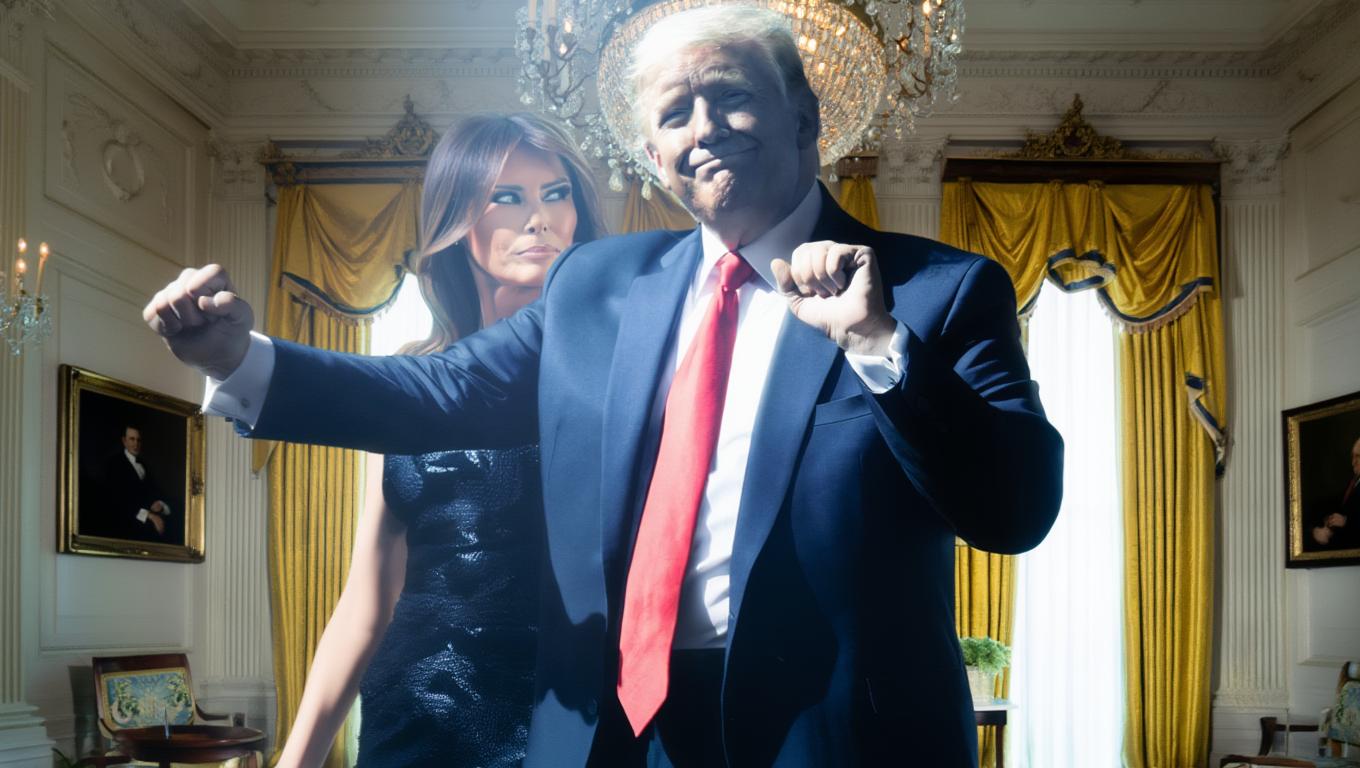
During a Tuesday address to House Republican lawmakers at the Kennedy Center, President Donald Trump disclosed that First Lady Melania Trump disapproves of his signature campaign dance moves, describing them as “unpresidential” behavior unsuitable for the nation’s highest office.
The president’s candid remarks at the House GOP Member Retreat provided insight into private conversations between the first couple regarding his unconventional public performances that became a defining feature of his 2024 campaign events.
Behind the Scenes: A First Lady’s Concerns
Trump recounted his wife’s repeated attempts to discourage his public dancing, sharing her direct quotes with the assembled lawmakers. According to the president, Melania Trump has consistently characterized his dance routines as beneath the dignity of the presidential office.
“My wife hates when I do this,” Trump told the Republican gathering, explaining that the first lady considers such displays incompatible with presidential decorum. He described her as “a very classy person” who has made her position clear on multiple occasions.
The president revealed that Melania Trump has invoked historical precedent in her arguments, specifically referencing President Franklin Delano Roosevelt as an example of appropriate presidential conduct. Trump shared that she asked him to imagine FDR engaging in similar dance performances, clearly intending the comparison to highlight the contrast in presidential behavior across different eras.
Campaign Trail Phenomenon
Trump’s dancing became an unmistakable element of his 2024 campaign rallies, typically bookending events with energetic performances set to popular songs including the Village People’s “Y.M.C.A.” and Lee Greenwood’s “God Bless the U.S.A.” His characteristic moves involve rhythmic arm movements, fist pumping, and crowd engagement through pointing and gesturing.
These performances served as crowd-pleasing moments that often generated significant social media attention and became viral content across various platforms. The dance routines represented a departure from traditional political rally formats, reflecting Trump’s unconventional approach to political communication and audience engagement.
The president’s Tuesday comments were not the first time he has publicly acknowledged his wife’s disapproval. During a 2023 Iowa event, he shared similar feedback from the first lady, indicating this has been an ongoing point of discussion within their household throughout his political activities.
Broader Performance Concerns
Beyond dancing, Trump revealed that Melania Trump also objects to his physical impressions during speeches, particularly his imitations of weightlifters. These performances typically occur when the president discusses policies related to transgender athletes in sports competitions, using exaggerated physical gestures to emphasize his political positions.
The first lady’s concerns appear to extend to various forms of physical performance that she views as inconsistent with presidential dignity. Trump indicated that she believes supporters may simply be polite rather than genuinely appreciative of these theatrical elements.
Historical Context and Presidential Behavior
Melania Trump’s invocation of FDR reflects broader questions about evolving standards of presidential conduct and public presentation. Different eras have established varying expectations for how presidents should present themselves in public settings, with modern media and social platforms creating new dynamics for political communication.
Trump’s response to his wife’s historical comparison demonstrated his awareness of these changing standards while defending his approach. He acknowledged Roosevelt’s elegance while suggesting that contemporary political environments may warrant different strategies for connecting with audiences.
The president’s willingness to share these private conversations publicly illustrates his approach to transparency regarding family dynamics and decision-making processes. This openness contrasts with more traditional presidential families, who typically maintain stricter boundaries between private discussions and public commentary.
Political Communication Strategy
The dancing phenomenon represents a broader strategy of using unconventional methods to maintain audience engagement and create memorable moments. Political analysts have noted that such performances can serve multiple functions, including humanizing political figures and creating shareable content that extends campaign reach beyond traditional media coverage.
Trump’s insistence that “everybody wants me to dance” suggests his belief that these performances serve important political and communicative purposes, despite concerns about presidential dignity. This tension between effective audience engagement and institutional decorum reflects ongoing debates about modern political communication.
Family Dynamics in the Public Eye
The president’s public discussion of his wife’s concerns provides unusual insight into how first families navigate the intersection of personal relationships and public responsibilities. Melania Trump’s perspective reflects traditional views of presidential behavior, while her husband’s approach emphasizes contemporary audience expectations and engagement strategies.
These revelations occurred during a significant period in Trump’s presidency, following major international developments, including military operations in Venezuela that resulted in the capture of former dictator Nicolás Maduro and his wife. The contrast between discussing serious international affairs and personal family dynamics regarding dance moves illustrates the range of topics that occupy presidential attention.
Looking Forward
Despite his wife’s ongoing objections, Trump’s comments suggest he will likely continue incorporating these performance elements into his public appearances. His belief that supporters genuinely appreciate these moments appears to outweigh concerns about traditional presidential decorum.
The ongoing tension between the first couple on this issue reflects broader questions about how modern presidents should balance personal authenticity, audience engagement, and institutional dignity. As Trump’s second term progresses, observers will likely continue monitoring whether family influence or public response ultimately shapes his approach to these unconventional presidential performances.
The House GOP Member Retreat comments demonstrate that even as president, Trump remains willing to share personal family discussions that provide insight into the human dynamics behind political decision-making, maintaining his characteristic approach to public communication that blends personal revelation with political messaging.