
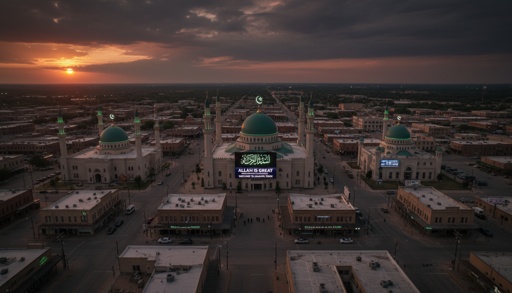
Texas has passed legislation banning “Sharia compounds” following concerns over a proposed Muslim-majority development near Dallas, marking a significant victory for those who believe American constitutional law must never be subordinated to foreign religious governance systems.
EPIC City Development Sparks Legislative Response
The East Plano Islamic Center announced plans in 2024 for EPIC City, a residential community 40 minutes from Dallas featuring over 1,000 homes, a mosque, K-12 school, community college, and shops. The project immediately drew scrutiny from Texas lawmakers who questioned whether the development would enforce Islamic religious law or discriminate against non-Muslim residents. U.S. Senator John Cornyn called for a Department of Justice investigation into religious discrimination allegations in early 2025, coordinating with state agencies to examine potential fair housing violations. This scrutiny reflects legitimate concerns about maintaining constitutional protections for all Americans regardless of religious affiliation.
Texas Takes Action to Protect Constitutional Governance
Governor Greg Abbott signed House Bill 4211 in late 2025, explicitly targeting developments like EPIC City to prevent the creation of private governance systems outside Texas and federal law. Abbott’s office announced the legislation as “Banning Sharia Compounds In Texas,” reinforcing his February 2025 statement that Sharia law has no place in the state. The law addresses a fundamental principle: no religious system can supersede American constitutional governance. While the DOJ closed its investigation in June 2025 after finding no violations, the Texas Workforce Commission continues examining potential housing discrimination issues. This dual-track approach ensures both constitutional protections and fair housing standards are maintained.
Historical Context Reveals Ongoing Concerns
Texas already hosts the Dallas Islamic Tribunal, which has operated since before 2015 handling voluntary Muslim divorces under religious guidelines while remaining subordinate to Texas law. The tribunal operates similarly to Jewish Beth Din courts or Catholic marriage annulments under the 1925 Federal Arbitration Act, which permits voluntary religious arbitration. However, the EPIC City controversy differs significantly because it involves residential development rather than purely voluntary dispute resolution. Critics rightfully distinguish between individuals choosing religious arbitration and entire communities potentially structured around religious governance. Oklahoma attempted similar legislation in 2010 with a constitutional amendment banning Sharia, though courts struck it down for unconstitutionally targeting Muslims specifically.
Federal Legislation Follows Texas Lead
Two weeks after Abbott signed HB 4211, U.S. Representatives introduced the “No Sharia Act” in Congress to ban Islamic law implementation nationwide. This federal push demonstrates growing concern about protecting American legal supremacy across all states. The legislation reflects conservative principles of constitutional governance and resistance to any parallel legal systems that could undermine individual liberties guaranteed under the Bill of Rights. While developers insist EPIC City would integrate fully under U.S. law with no Sharia enforcement, the legislative response addresses reasonable concerns about precedent-setting. Allowing faith-based communities to operate outside mainstream governance structures risks creating separate enclaves where American constitutional protections might face challenges, particularly regarding women’s rights and religious freedom for those who dissent from community norms.
Sharia law in America isn't a myth. In North Texas, Islamic tribunals with Imams as judges issue Sharia-based rulings on marriage, divorce, and disputes. If Parties agree voluntarily, Texas courts can enforce them as arbitration agreements, bypassing the state's Sharia ban.… pic.twitter.com/15xPQ9NzEB
— ꪻꫝể ꪻꫝể (@TheThe1776) December 1, 2025
The Cato Institute argues personal religious practices like dietary rules and prayer pose no threat when voluntarily followed, comparing them to Jewish Halakha observance by Orthodox communities. However, this comparison overlooks crucial differences in scale and potential discrimination issues raised by Senator Cornyn’s investigation. The ongoing Texas Workforce Commission probe into fair housing violations suggests legitimate questions remain about whether non-Muslims would face barriers in these developments. Protecting religious liberty means ensuring all Americans can practice faith freely while maintaining one constitutional system governing everyone equally under law.
Sources:
No, Sharia Law Is Not Coming to Texas – Cato Institute
Does Sharia Law Trump Texas Law? – Texas Standard
Cornyn Calls on DOJ to Investigate EPIC City – U.S. Senate
Governor Abbott Signs Law Banning Sharia Compounds in Texas – Texas Governor