
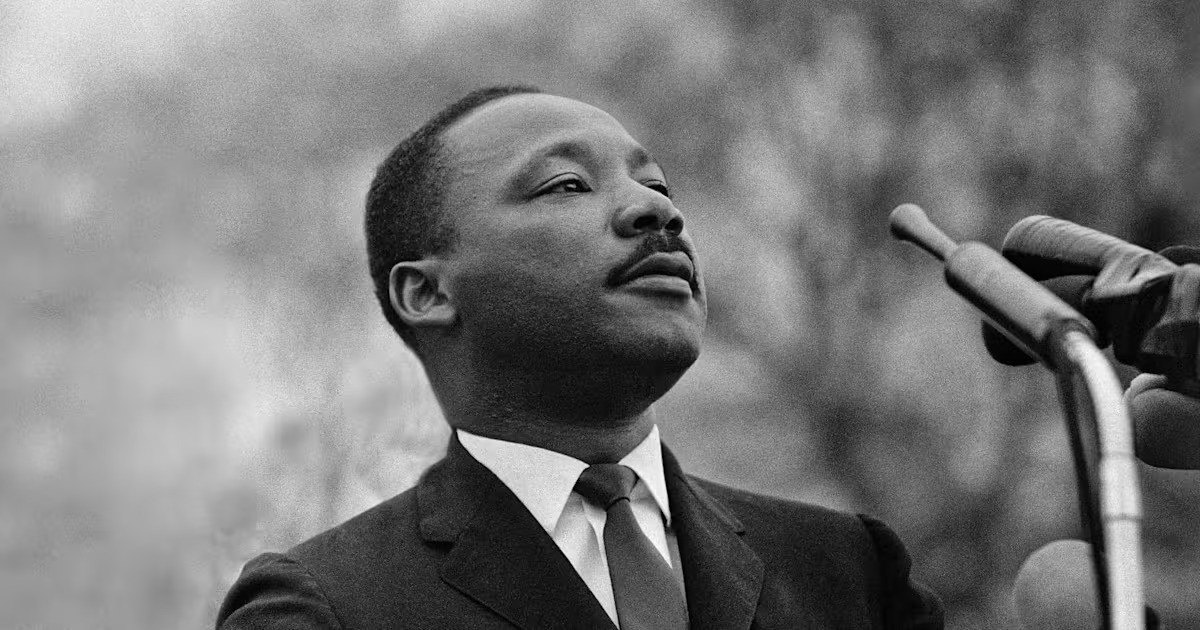
One of the most surprising facts about the man who led the American Civil Rights Movement is that for the first five years of his life, his name wasn’t Martin. He was born Michael King Jr. on January 15, 1929.
The story of his name change is not just a personal anecdote; it is a tale of international travel, religious history, and a father’s profound inspiration.
The Senior King’s Pilgrimage
The story begins with his father, Michael King Sr., a prominent pastor at Ebenezer Baptist Church in Atlanta. In 1934, King Sr. traveled to Berlin, Germany, to attend the Baptist World Alliance Congress.
This trip coincided with the rise of Nazi Germany, but for King Sr., the most impactful part of the journey was visiting the sites associated with the Protestant Reformation. He became deeply moved by the life and legacy of Martin Luther, the 16th-century German monk and theologian who famously challenged the Catholic Church.
A Legacy Reborn
King Sr. was so inspired by Martin Luther’s courage and his willingness to speak truth to power that he decided to change his own name upon his return to the United States. He became Martin Luther King Sr.
Wanting to pass this legacy of reform and conviction down to his son, he changed 5-year-old Michael’s name as well. From that point on, the boy was known as Martin Luther King Jr.
Key Facts About the Change
- Official Records: Despite the family using the new names starting in 1934, the legal paperwork wasn’t officially amended on Martin Luther King Jr.’s birth certificate until July 23, 1957—just years before his “I Have a Dream” speech.
- Initial Hesitation: Some historians suggest that the younger King was initially reluctant to embrace the weight of the name, but he eventually grew to embody the revolutionary spirit of the original Reformer.
- The “Mike” Nickname: Throughout his life, many of his closest friends and family members continued to call him “Mike.”
Symbolism of the Name
The name change proved to be prophetic. Just as Martin Luther nailed his 95 Theses to the door of the Castle Church in Wittenberg to spark a global reformation, Martin Luther King Jr. would eventually “nail” the conscience of America to the door of the White House and the Lincoln Memorial, sparking a reformation of civil rights and human dignity.
By adopting the name of the Great Reformer, the King family linked the struggle for racial equality in America to a centuries-old tradition of standing up for one’s beliefs against the status quo.