
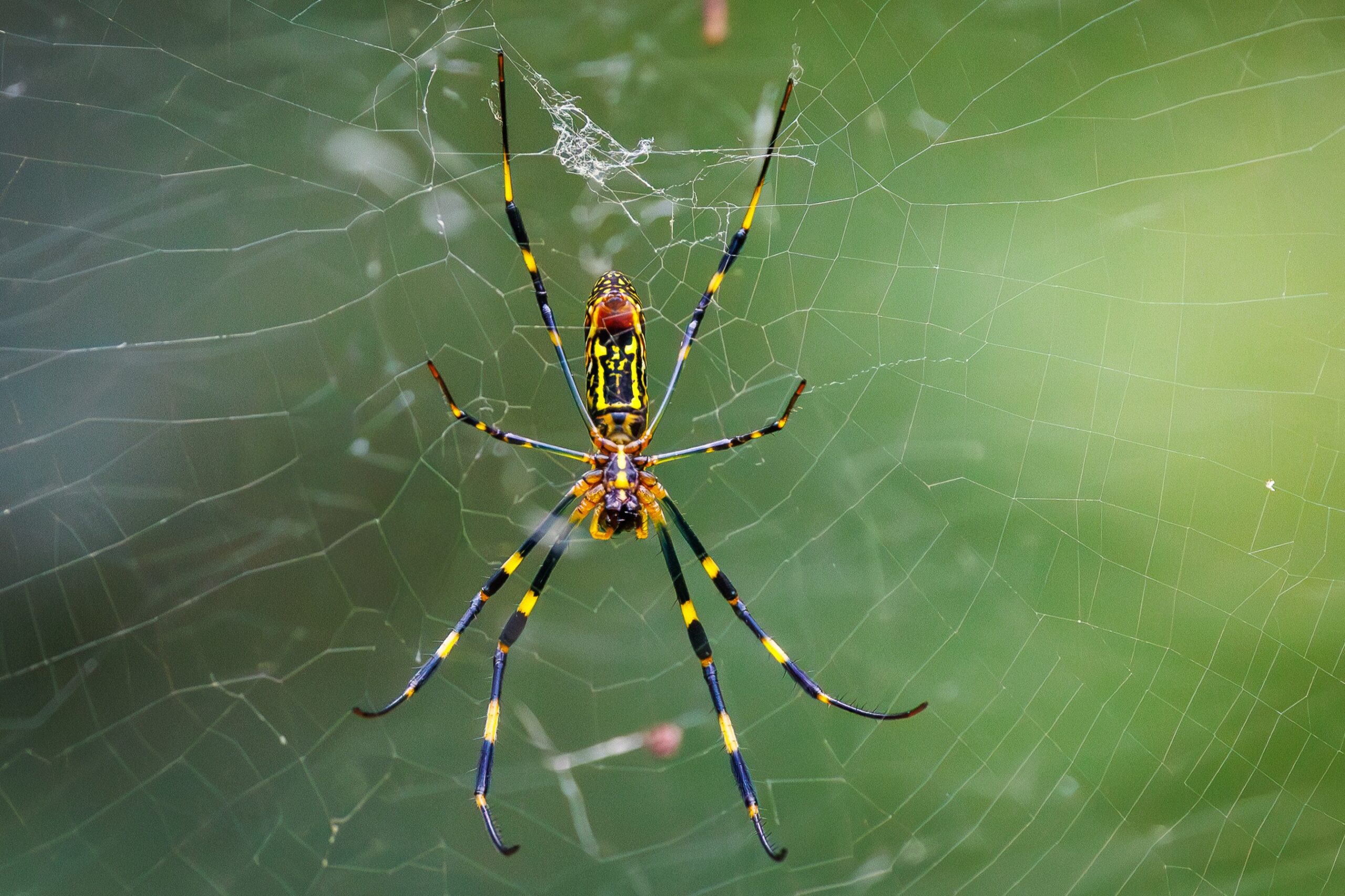
Palm-sized spiders from Asia continue their aggressive march across America, reaching at least a dozen states with confirmed sightings in Maryland and Massachusetts, as experts predict the invasion will accelerate after the spring hatching season arrives.
The Joro Spider Invasion Spreads
The Joro spider, identifiable by its bright yellow body with blue stripes and red markings, has established itself throughout southeastern states and now threatens northeastern territories. Female specimens reach up to four inches in size, roughly the width of a human palm, while smaller brown males measure half that length. Scientists forecast that New York and New Jersey face imminent colonization, though large-scale invasions have not yet materialized in those states. The species reaches full size during the late summer and fall mating season, when females construct massive golden orb webs to ensnare prey.
Urban Survival Advantages
Research from the University of Georgia’s Odum School of Ecology reveals the species possesses remarkable tolerance for urban environments, explaining its rapid proliferation in American cities. Scientists tested the arachnids’ resilience by simulating prey sounds with tuning forks near busy roadways. Study lead Andy Davis reported the spiders remained unaffected by traffic noise and urban chaos, noting their webs appear everywhere during fall months, including alongside heavily trafficked roads. Combined with exceptional cold tolerance, these survival traits enable the species to thrive where native spiders struggle, giving Joro spiders significant competitive advantages in populated areas across America.
Public Safety and Control Measures
Despite their venomous nature, experts confirm Joro spiders pose minimal threat to humans or pets. Staten Island ecologist Jose Ramirez-Garofalo stated no documented fatalities or medically significant bites have occurred, emphasizing the species shows extreme reluctance to bite. Ecologists urge citizens to report sightings through iNaturalist or Joro Watch platforms, enabling scientists to track the invasion’s progress. Virginia Tech entomologist Theresa Dellinger advises homeowners can remove nuisance spiders from doorways, porches, and patios using standard methods including brooms or aerosol insecticide sprays, the same approaches effective against native spider species.