
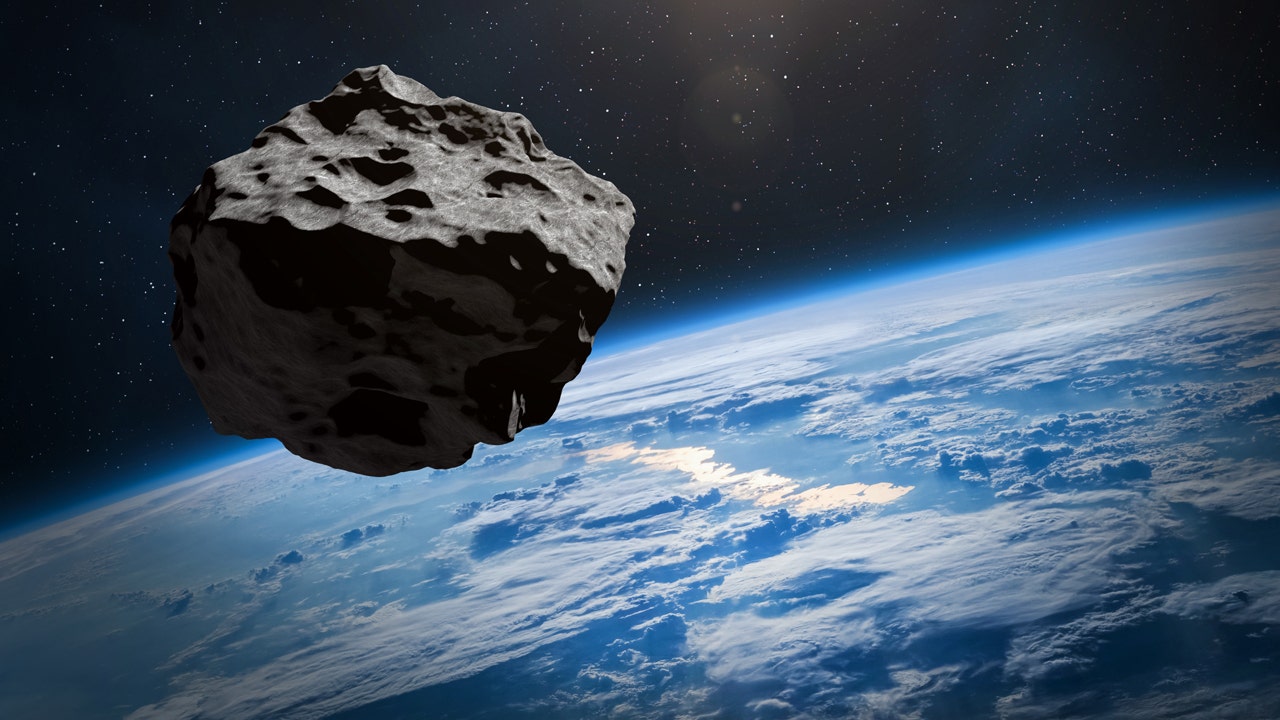
A mysterious object hurtling through the solar system is exhibiting unusual acceleration patterns that scientists cannot explain through gravity alone, prompting researchers to investigate whether it might be a Soviet spacecraft that vanished nearly four decades ago.
Unusual Movement Defies Conventional Explanation
The object, designated 1998 KY26, measures approximately 36 feet wide and was initially classified as a near-Earth asteroid. However, its trajectory shows what scientists call nongravitational acceleration, meaning forces beyond the gravitational pull of the sun and planets are influencing its path through space. NASA Administrator Jared Isaacman emphasized that the object poses no threat to Earth, stating he has seen no evidence suggesting danger to our planet.
A recent peer-reviewed study published in the journal Icarus by Georgia Institute of Technology researchers Korbin Hansen and Masatoshi Hirabayashi examined the dark comet theory, which suggested buried water ice could be vaporizing and propelling the object forward. Their calculations revealed KY26 is likely too warm for water ice to survive long enough to produce the observed acceleration, effectively ruling out this explanation.


The Soviet Spacecraft Theory
Harvard astrophysicist Avi Loeb, along with researchers Adam Hibberd and Adam Crowl, explored an unconventional possibility: KY26 could actually be Phobos 1, an unmanned Soviet probe that lost contact while traveling toward Mars in 1988. The researchers constructed a simplified model of the spacecraft and compared how it would reflect sunlight while spinning against actual observations of KY26.
Their analysis found the spacecraft model closely matched eight separate observation sets of the object. KY26 reflects roughly 52 percent of incoming sunlight and completes a full rotation every 5.35 minutes. The researchers tested whether solar radiation pressure against cylindrical surfaces or solar panels could explain the unusual movement, finding their model aligned with hundreds of telescope and radar observations. While describing their hypothesis as strongly plausible, the team acknowledged their findings cannot definitively prove KY26 is the missing Soviet spacecraft.
Competing Theories and Future Investigation
Alternative research published in Astronomy and Astrophysics this year analyzed light reflected by KY26, concluding its composition appears consistent with rocky asteroids from the inner asteroid belt. Other scientists suggest sunlight hitting the object and heat radiating from its surface could produce the extra acceleration without requiring buried water or artificial origins.
The Japan Aerospace Exploration Agency plans to send its Hayabusa2 spacecraft to rendezvous with KY26 in July 2031, according to a 2025 Nature Communications study. This encounter will provide the opportunity to definitively determine whether the object is a natural asteroid or lost Soviet technology. Loeb suggested the mission’s cameras might reveal Soviet manufacturing labels instead of an icy surface, settling the debate once and for all.