
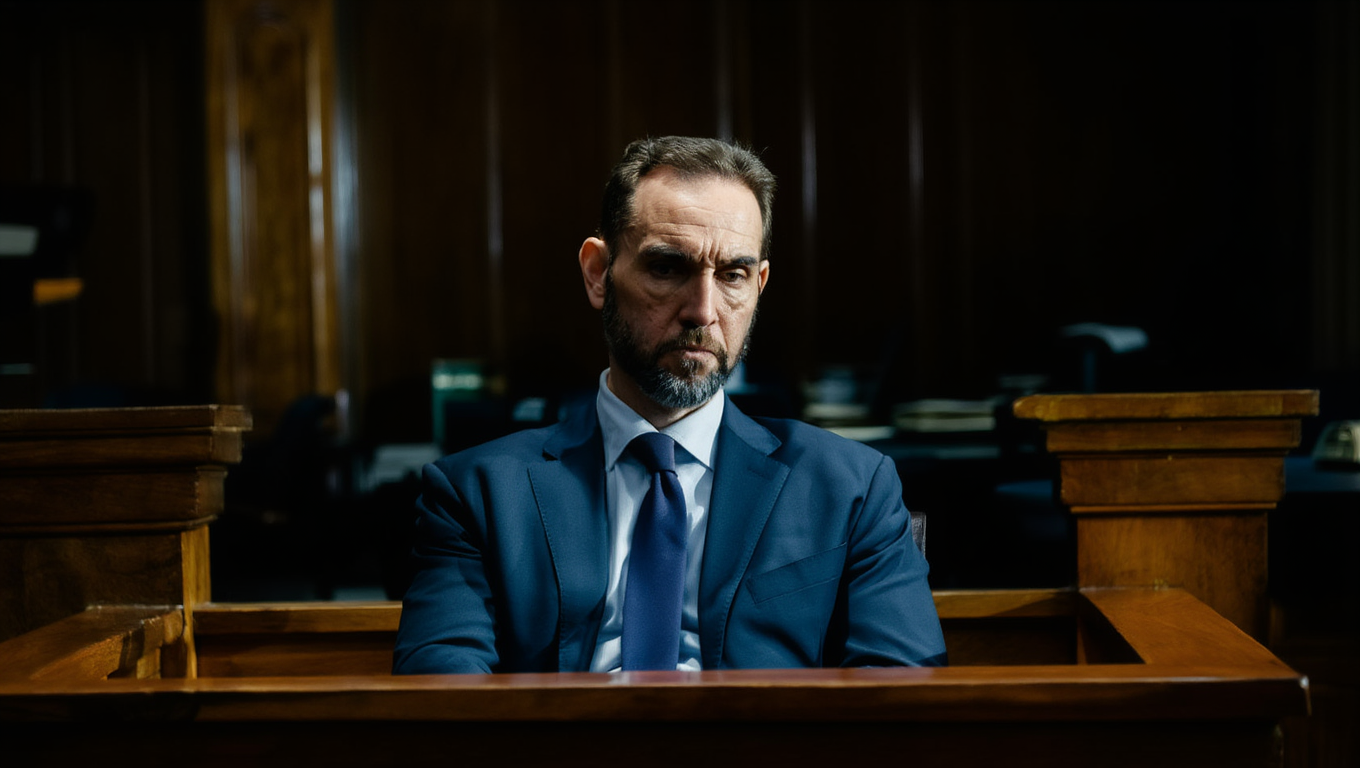
Former Special Counsel Jack Smith made his first public appearance before Congress on Thursday, defending his criminal investigations into President Donald Trump while facing intense scrutiny from Republican lawmakers and online attacks from Trump himself.
The House Judiciary Committee hearing marked Smith’s initial public testimony since resigning from his position shortly before Trump’s inauguration in January 2025. The session highlighted the deep partisan divisions surrounding the federal cases that were ultimately dropped following Trump’s reelection victory.
Jack Smith: "President Trump was charged because the evidence established that he willfully broke the law — the very laws he took an oath to uphold. Grand juries in 2 separate districts reached this conclusion based on his actions. Rather than accept his defeat in the 2020,… pic.twitter.com/NvDX7zTUGR
— Aaron Rupar (@atrupar) January 22, 2026
Smith Maintains Investigations Were Nonpartisan
During his testimony, Smith firmly defended the integrity of his prosecutorial decisions, emphasizing that political considerations played no role in his investigations of the sitting president.
“I made my decisions without regard to President Trump’s political association, activities, beliefs, or candidacy in the 2024 election,” Smith told committee members. “President Trump was charged because the evidence established that he willfully broke the law—the very laws he took an oath to uphold.”
The former prosecutor, who previously handled war crimes cases at The Hague, was appointed as special counsel in November 2022 under the Biden administration. His role was designed to operate independently from the Justice Department’s political leadership, though the assignment carried extraordinary sensitivity given Trump’s status as both a former president and active 2024 candidate.
Trump Responds with Criminal Prosecution Demands
As Smith testified, Trump took to social media to launch a counterattack, calling for criminal charges against his former prosecutor without providing supporting evidence for such claims.
“Based on his testimony today, there is no question that Deranged Jack Smith should be prosecuted for his actions,” Trump posted online. “He destroyed the lives of many innocent people, which has been his history as a prosecutor. At a minimum, he committed large-scale perjury!”
As Speaker of the House, I had a 24/7 security detail and my location was known to the government at all times.
Flight risk? Another of Jack Smith’s many lies. https://t.co/MtgJ3HVHLk
— Kevin McCarthy (@SpeakerMcCarthy) January 22, 2026
The president’s response underscored the ongoing tensions surrounding the investigations that dominated much of the period between Trump’s two terms in office. Smith’s probe represented one of the most significant legal challenges faced by a former president in American history.
Two Federal Indictments Detailed
Smith’s investigation resulted in two separate federal indictments against Trump, both of which were eventually dismissed following the 2024 election results and Trump’s return to the presidency.
The first case, filed in August 2023, centered on Trump’s efforts to overturn the 2020 election results and his role in the January 6, 2021, Capitol riot. A federal grand jury approved four charges: conspiracy to defraud the United States, obstruction of an official proceeding, conspiracy to obstruct an official proceeding, and conspiracy against constitutional rights.
The second indictment, issued in June 2023 by a Florida grand jury, focused on Trump’s handling of classified documents after leaving office. This case included 40 counts related to the retention of sensitive materials, obstruction of justice, false statements, and violations of the Espionage Act regarding classified information.
Partisan Battle Lines Drawn During Hearing
Thursday’s hearing reflected the sharp political divisions that have characterized discussions of Trump’s legal challenges. Democratic committee members praised Smith’s work and defended the investigations’ legitimacy, while Republicans questioned his motives and criticized the prosecutorial approach.
Rep. Chip Roy reveals he discovered just WEEKS AGO that his phone records were also TARGETED By Jack Smith's corrupt spy operations.
He goes so scorched earth he actually FORCES Smith to apologize on LIVE TV:
ROY: "I'm thankful for the great staff who discovered the email where… pic.twitter.com/yHUYrUw4i7
— Benny Johnson (@bennyjohnson) January 22, 2026
The hearing format allowed both parties to advance their preferred narratives about the investigations. Democrats used the opportunity to reinforce their view that Trump’s actions warranted criminal prosecution, while Republicans portrayed Smith’s work as politically motivated overreach.
Cases Dropped Due to Presidential Immunity
Both federal cases against Trump were ultimately withdrawn following his successful 2024 presidential campaign. The Justice Department maintains a longstanding policy prohibiting the investigation and prosecution of sitting presidents, effectively ending Smith’s prosecutorial efforts.
Smith resigned from his position shortly before Trump’s inauguration in January 2025, concluding a tenure that lasted approximately two years and generated unprecedented legal and political controversy.
Smith Stands Behind Prosecutorial Decisions
Despite the cases’ dismissal, Smith used Thursday’s hearing to reaffirm his belief that the evidence justified criminal charges against Trump.
“I want to be clear: I stand by my decisions as special counsel, including the decision to bring charges against President Trump,” Smith testified. “Our investigation developed proof beyond a reasonable doubt that President Trump engaged in criminal activity.”
Smith emphasized that his prosecutorial standards would remain consistent regardless of political affiliation, stating that he would pursue identical charges against any former president based on similar evidence, whether Democrat or Republican.
Historical Context and Precedent
The Smith investigations represented an unprecedented chapter in American political and legal history. Never before had a former president faced federal criminal charges, let alone charges related to efforts to overturn an election and retain power.
The special counsel’s work also occurred during a unique period when Trump simultaneously served as the defendant in multiple criminal cases while campaigning for a return to the presidency. This dynamic created complex legal and political challenges that tested American democratic institutions.
Broader Implications for Future Cases
Smith’s testimony and the surrounding controversy raise important questions about the intersection of criminal law and presidential politics. The cases’ ultimate dismissal due to Trump’s electoral victory highlights the practical limitations of prosecuting political figures who maintain significant public support.
The hearing also demonstrated how special counsel investigations, designed to operate independently from political pressures, remain subject to intense partisan interpretation and debate. Smith’s insistence on his investigations’ nonpartisan nature contrasted sharply with Republican characterizations of prosecutorial misconduct.
As the hearing concluded, it became clear that the Smith investigations will continue to generate political debate and legal analysis for years to come. The former special counsel’s first public testimony provided insight into his decision-making process while reinforcing the deep divisions surrounding one of the most consequential prosecutorial efforts in American history.
The long-term impact of Smith’s work remains uncertain, but Thursday’s hearing ensured that questions about accountability, prosecutorial independence, and presidential immunity will continue to shape American political discourse.