
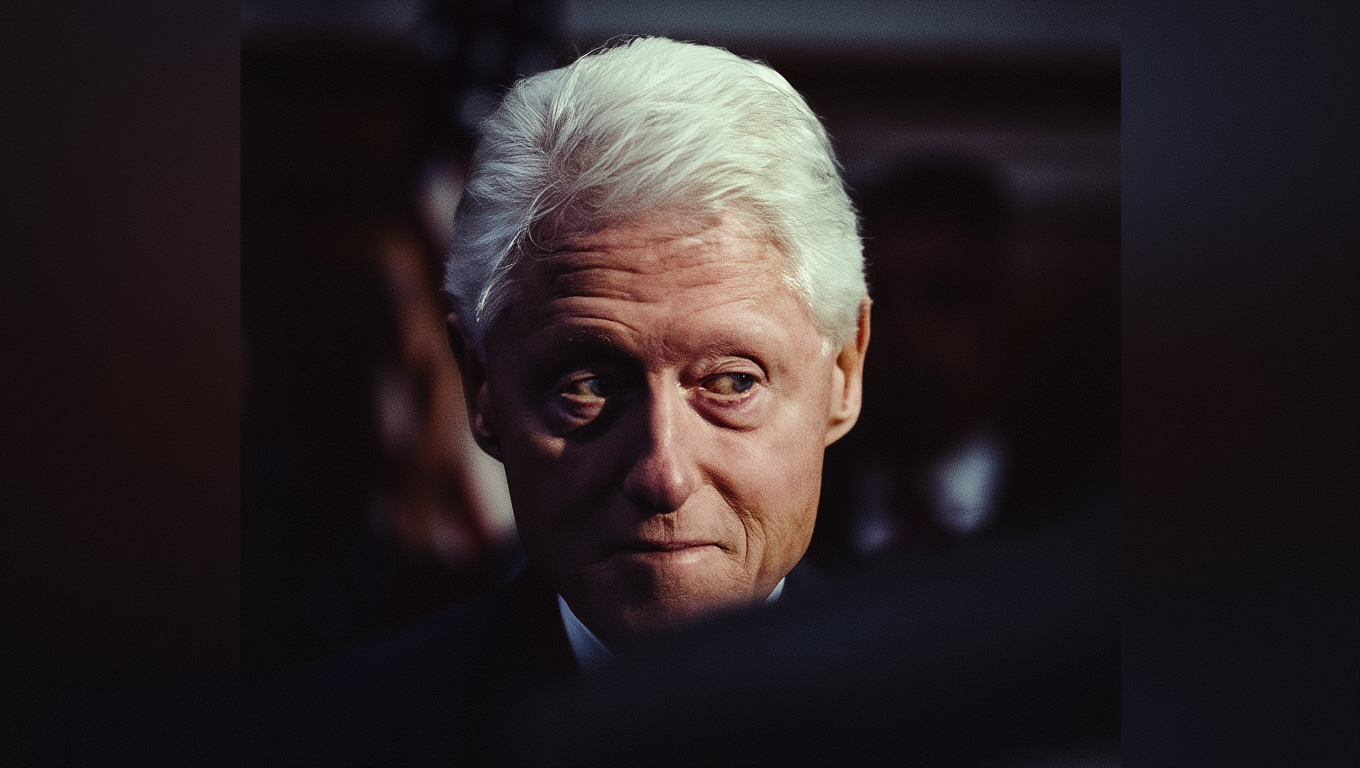
Former President Bill Clinton and former Secretary of State Hillary Clinton have refused to appear before a House committee investigating the government’s handling of the Jeffrey Epstein case, setting up a potential constitutional showdown between Congress and two of the Democratic Party’s most prominent figures.
House Oversight Committee Chairman James Comer announced Tuesday that he will pursue contempt of Congress charges against Bill Clinton after the former president failed to appear for scheduled testimony. Hillary Clinton was similarly ordered to testify on Wednesday but has indicated she will not comply with the congressional subpoena.
The standoff represents a significant escalation in the Republican-led investigation into how federal agencies handled the case of Epstein, the disgraced financier who died in federal custody in 2019 while awaiting trial on sex trafficking charges. The probe has taken on heightened political significance as lawmakers from both parties seek answers about potential government failures in the case.
Legal Challenge to Congressional Authority
In a strongly worded response filed Monday, attorneys representing the Clintons argued that the subpoenas exceed Congress’s constitutional authority and serve no legitimate legislative purpose. The legal filing characterizes the investigation as a politically motivated effort designed to embarrass Democratic leaders at the direction of President Trump.
“The subpoenas are invalid and legally unenforceable, untethered to a valid legislative purpose, unwarranted because they do not seek pertinent information, and an unprecedented infringement on the separation of powers,” the Clinton legal team wrote in their formal response to the committee.
The attorneys further argued that the congressional demand violates established Supreme Court precedent regarding the limits of legislative investigative power. This legal strategy appears designed to force a court battle over the scope of congressional subpoena authority, potentially creating a lengthy legal process that could delay or derail the investigation entirely.
Although subpoenaed, Bill and Hillary Clinton are refusing to testify in the Jeffrey Epstein investigation.
Arrest both of them.
Nobody is above the law.
— Catturd ™ (@catturd2) January 13, 2026
Bipartisan Support for Investigation
Chairman Comer emphasized that the subpoenas received bipartisan approval from the oversight committee, distinguishing this investigation from other partisan inquiries that have divided lawmakers along party lines. Democratic committee members voted alongside Republicans to authorize the subpoenas, lending additional weight to the congressional demand for testimony.
“This wasn’t something that I just issued as chairman of the committee,” Comer told reporters at the Capitol. “No one’s accusing Bill Clinton of anything, any wrongdoing. We just have questions, and that’s why the Democrats voted along with Republicans to subpoena Bill Clinton.”
The bipartisan nature of the subpoena authorization complicates the Clinton legal team’s argument that the investigation lacks legitimate purpose. Democratic support for compelling testimony suggests that lawmakers across the political spectrum view the inquiry as necessary for understanding potential government failures in the Epstein case.
Clinton’s Connection to Epstein
Public records and media reports have documented a relationship between Bill Clinton and Jeffrey Epstein during the late 1990s and early 2000s, before Epstein’s 2008 guilty plea to state charges involving solicitation of prostitution and solicitation involving a minor in Florida. Flight logs show Clinton traveled multiple times on Epstein’s private aircraft, though the former president has consistently denied knowledge of any criminal activity.
Importantly, survivors of Epstein’s abuse have not accused Clinton of wrongdoing, and the congressional investigation does not appear to be pursuing allegations of criminal conduct by the former president. Instead, lawmakers say they are focused on understanding how government agencies handled information about Epstein’s activities and whether officials failed to properly investigate or prosecute the case.
The distinction between investigating potential government failures and pursuing allegations against individuals has become a key point in the political debate surrounding the probe. Republicans argue they are conducting legitimate oversight of federal agencies, while the Clinton team characterizes the investigation as a fishing expedition designed to damage political opponents.
🚨 HYPOCRISY EXPOSED — CLINTON GHOSTS CONGRESS, AGAIN!
X is nonstop with “RELEASE THE EPSTEIN FILES!” every hour — demands for transparency and justice…
Yet one of the most connected names in the entire scandal — Bill Clinton (dozens of mentions, Lolita Express flights, photos… pic.twitter.com/cDVyz6Zku7
— Jake (@JakeCan72) January 13, 2026
Criticism of the Investigation’s Scope
In their response to the committee, the Clintons launched a broader attack on the investigation’s methodology, arguing that Chairman Comer has failed to pursue other potentially relevant witnesses. They noted that the committee has interviewed only two individuals as part of the probe: former Labor Secretary Alexander Acosta and former Attorney General William Barr.
The Clinton statement highlighted that seven other former government officials received subpoenas but were not ultimately compelled to testify, suggesting inconsistent enforcement of congressional demands for information. This selective approach, they argue, undermines the committee’s claims about the investigation’s importance and legitimate purpose.
Sara Guerrero, spokesperson for Democrats on the oversight committee, struck a more conciliatory tone while still supporting the investigation’s goals. “Cooperating with Congress is important, and the committee should continue working with President Clinton’s team to obtain any information that might be relevant to our investigation,” she said.
Political Context and Broader Implications
The Epstein investigation unfolds against the backdrop of renewed political tensions following President Trump’s return to office and his controversial decision to pardon January 6 defendants. The Clinton response explicitly connected their refusal to testify to broader opposition to the current administration’s agenda, including immigration enforcement policies and other conservative priorities.
“Bringing the Republicans’ cruel agenda to a standstill while you work harder to pass a contempt charge against us than you have done on your investigation this past year would be our contribution to fighting the madness,” the Clintons wrote in their statement.
This political framing transforms what might otherwise be a straightforward congressional oversight matter into a broader confrontation between Democratic opposition and Republican governance. The Clintons appear to be positioning their defiance as part of resistance to the Trump administration rather than simply a legal dispute over congressional authority.
Justice Department Closure and Ongoing Questions
The congressional investigation gained momentum following the Justice Department’s decision last July to formally close the Epstein matter, a move that surprised many observers who expected continued federal scrutiny of the case. The department’s declaration that the matter was resolved conflicted with ongoing conspiracy theories and calls for additional investigation from across the political spectrum.
In response to public pressure, a bipartisan group of House lawmakers successfully passed legislation requiring the release of all government files related to Epstein. This transparency measure reflects widespread congressional concern about potential gaps in the government’s handling of the case and public demand for accountability.
The file release requirement suggests that even if the Clinton testimony dispute remains unresolved, additional information about the government’s Epstein investigation will eventually become public. This documentation could provide answers to some questions driving the congressional probe, though lawmakers argue that witness testimony remains essential for understanding key decisions and potential failures.
As the contempt proceedings move forward, the dispute will likely test the boundaries of congressional investigative power and set precedents for future oversight battles between legislative and executive branch figures. The outcome could significantly impact how former officials respond to congressional subpoenas and shape the balance of power in government accountability efforts.
These two have a long history of obstruction, and for good reason. Both are corrupt, but that is not the point the subpoenas have a proper purpose, but the fact they may expose even more gross behavior of the pair, is the real reason for the fight to avoid appearing.
who can get away with claiming, I have no more to give then these two. The last thing they want is to truth to emerge. Nail them!