
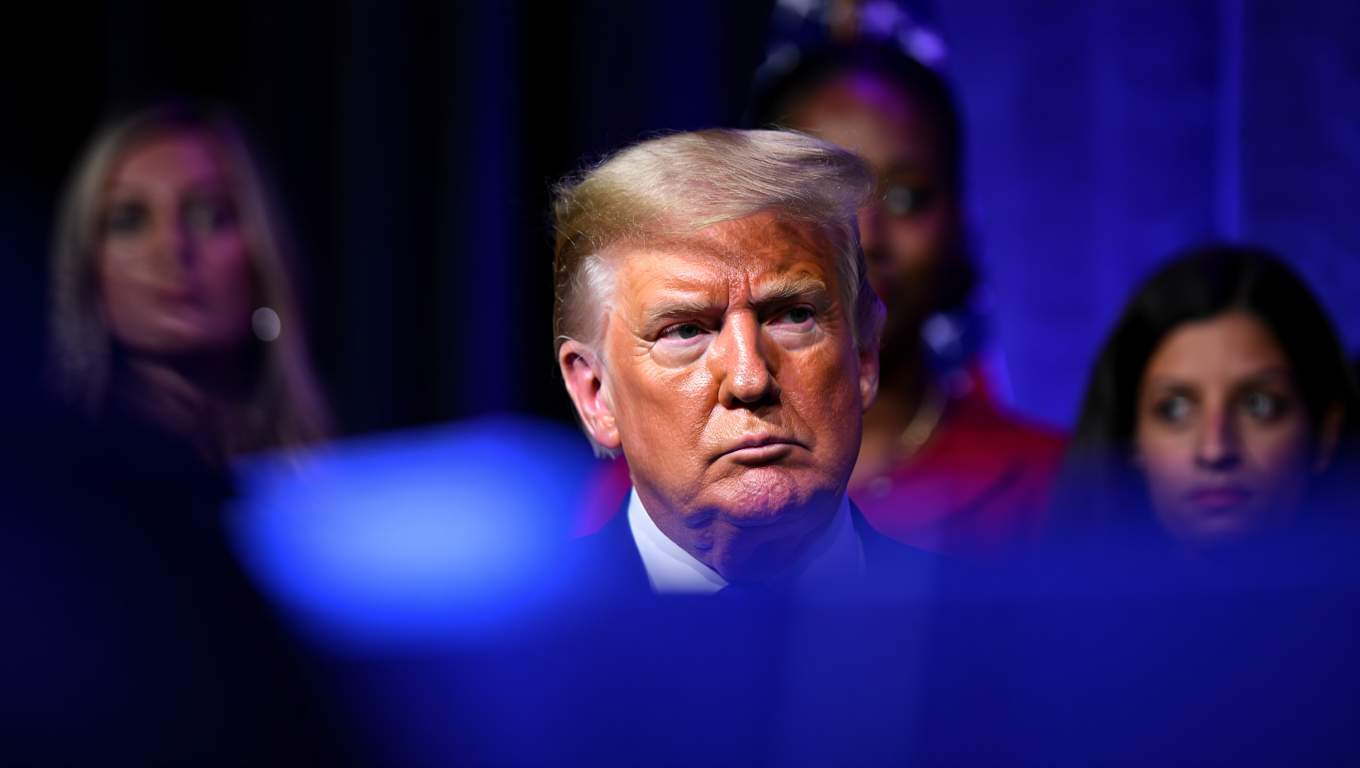
President Donald Trump delivered a pointed message to House Republicans during their legislative retreat Tuesday, calling for swift passage of federal voter identification requirements as the party prepares for the upcoming midterm elections. Speaking at the John F. Kennedy Center for the Performing Arts in Washington, Trump emphasized the urgency of implementing nationwide voting restrictions through previously stalled legislation.
The president’s remarks centered on reviving the SAVE Act, a controversial measure that cleared the House in 2025 but failed to advance in the Senate. The legislation would mandate proof of citizenship for all federal election participation, representing one of the most significant voting law changes proposed in recent years.
Legislative Push Gains Momentum
Trump’s advocacy for the voter ID mandate reflects broader Republican efforts to reshape election procedures nationwide. During his address to party lawmakers, the president stressed the political importance of the initiative, suggesting that electoral success depends on implementing these requirements.
“You want to have Voter ID. You want to insist on it,” Trump told the assembled Republicans, according to reports from the closed-door session. The president indicated potential modifications to the legislation, including a possible name change from the current “Save America Act” designation.
The renewed focus on voter identification comes as Republicans prepare for midterm campaigns where election integrity messaging has become a central theme. Trump’s comments suggest the party views this issue as both a policy priority and a political advantage heading into November’s contests.
The thing that never happens happened again.
Pass the SAVE Act. https://t.co/VkZ9fTWOLa
— Mike Lee (@SenMikeLee) January 12, 2026
Republican Support Solidifies
Following Trump’s remarks, several prominent GOP lawmakers publicly endorsed the voter ID initiative through social media statements. Senator Mike Lee of Utah expressed enthusiasm for the proposal, characterizing it as essential for protecting American electoral systems.
Representative Byron Donalds of Florida similarly voiced support, emphasizing the citizenship verification aspects of the proposed legislation. The coordinated response from Republican officials indicates party unity on the issue, despite previous legislative obstacles.
The SAVE Act’s core provisions would require documentary proof of citizenship for voter registration in federal elections, going beyond current requirements in most states. Supporters argue these measures would prevent non-citizens from participating in elections, though critics dispute the prevalence of such incidents.
If there are senators who oppose the SAVE Act, they should have to signal their opposition with their vote
Americans overwhelmingly support this bill, which would require proof of citizenship to register to vote
Senators shouldn’t be able to kill it with mere silence & inaction
— Mike Lee (@BasedMikeLee) January 12, 2026
Democratic Opposition Remains Firm
Senate Minority Leader Chuck Schumer of New York has maintained strong opposition to the voter ID legislation, characterizing it as a discriminatory policy that would prevent legitimate voters from participating in elections. In previous statements, Schumer emphasized unified Democratic resistance to the measure.
“Every single Senate Democrat, every single one of us, is united against it,” Schumer declared in April 2025, highlighting the procedural challenges Republicans face in advancing the legislation. The Senate’s 60-vote threshold for most legislation presents a significant obstacle for GOP efforts.
Democratic lawmakers have consistently argued that voter ID requirements disproportionately affect minority communities, elderly citizens, and low-income Americans who may face challenges obtaining necessary documentation. They contend that existing safeguards adequately protect election integrity without additional restrictions.
California Becomes Focal Point
Trump specifically targeted California’s voting policies during his Tuesday remarks, criticizing the state’s legislation that prohibits local governments from implementing their own voter ID requirements. The president suggested that opposition to identification mandates indicates intent to manipulate election outcomes.
California Governor Gavin Newsom has previously challenged claims about non-citizen voting in his state, requesting evidence to support allegations of widespread illegal participation. During a March 2025 podcast appearance, Newsom questioned the factual basis for such accusations.
The focus on California reflects broader tensions between federal and state election administration, with Republican officials seeking to override local policies they view as insufficient. The state’s large electoral vote count and Democratic leadership make it a frequent target for GOP criticism.
Seven Steps to a Highly Effective Congress
1. End the Zombie Filibuster
2. @DOGE 2.0 to slash spending
3. Pass the Shutdown Fairness Act
4. Pass the SAVE Act
5. Pass the REINS Act
6. Abolish earmarks
7. Pass aggressive permitting reform https://t.co/PTLSjdEmyF
— Mike Lee (@BasedMikeLee) January 11, 2026
Impeachment Concerns Drive Urgency
Trump’s voter ID advocacy occurred alongside warnings about potential impeachment proceedings if Republicans lose control of Congress in the midterm elections. The president explicitly linked electoral success to his political survival, emphasizing the stakes for party lawmakers.
“You got to win the midterms. Cause if we don’t win the midterms, it’s just going to be, they’ll just find a reason to impeach me,” Trump told the Republican gathering. This connection between voting legislation and partisan political outcomes underscores the charged atmosphere surrounding election policy debates.
The impeachment concerns reflect Trump’s ongoing legal challenges and political vulnerabilities, which could intensify under a divided government. Republican lawmakers face pressure to support both the voter ID initiative and broader electoral strategies designed to maintain party control.
Ballot Initiative Activity Continues
Beyond federal legislation, voter ID requirements are advancing through state-level initiatives, including a California constitutional amendment effort currently collecting signatures. The proposed measure would require identification and citizenship proof for all in-person voting, representing a significant change from current state policies.
If organizers gather sufficient signatures, California voters could decide on the voter ID amendment during the November elections, potentially altering the state’s approach to election administration. The initiative reflects grassroots support for identification requirements even in traditionally Democratic strongholds.
Similar efforts in other states demonstrate the continuing political salience of voter ID issues across different electoral contexts. These campaigns often generate intense debate about voting access, election security, and democratic participation principles.
Looking Ahead to Midterm Elections
The renewed focus on voter identification requirements comes as both parties prepare comprehensive midterm election strategies. Republicans view the issue as mobilizing for their base while potentially appealing to independent voters concerned about election integrity.
Democrats, meanwhile, are likely to emphasize voting access and oppose what they characterize as restrictive measures designed to suppress participation. The competing narratives around voter ID requirements will likely feature prominently in campaign messaging and policy debates.
The outcome of these legislative and political battles could significantly influence both the conduct of future elections and the broader trajectory of American voting rights policy. As the midterm campaigns intensify, voter ID requirements appear positioned to remain a central point of partisan contention.